Whole House Water Filtration Systems: Cost and Choice
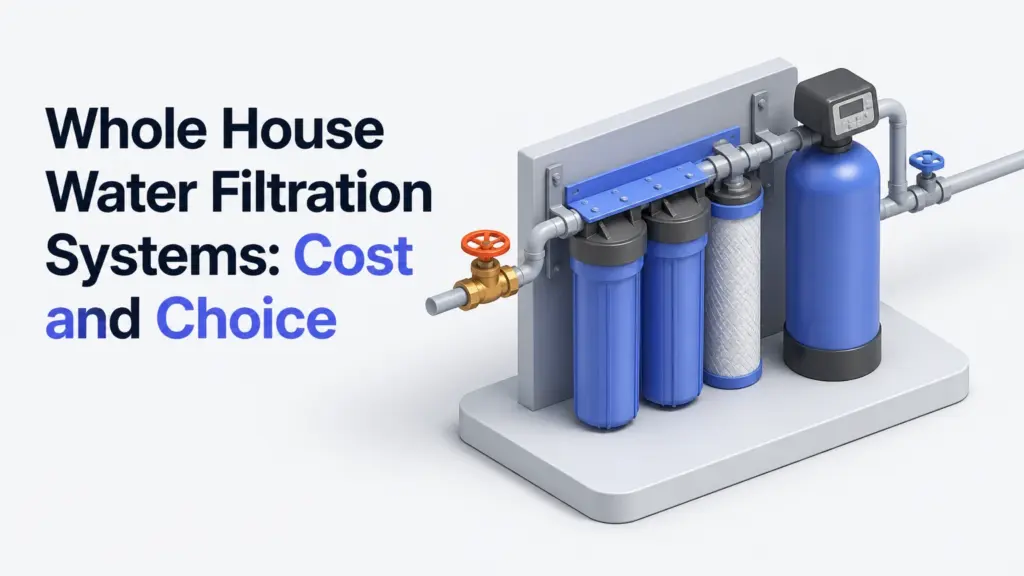
Whole house water filtration systems are point-of-entry treatment units installed on a home’s incoming main water line. A POE system treats water before it reaches faucets, showers, toilets, water heaters, and appliances, whereas a point-of-use filter treats water at one fixture only. The correct technology depends on laboratory results, peak flow, pressure, and the contaminant […]
Product Warranty vs Performance Warranty Solar Panels: Costs
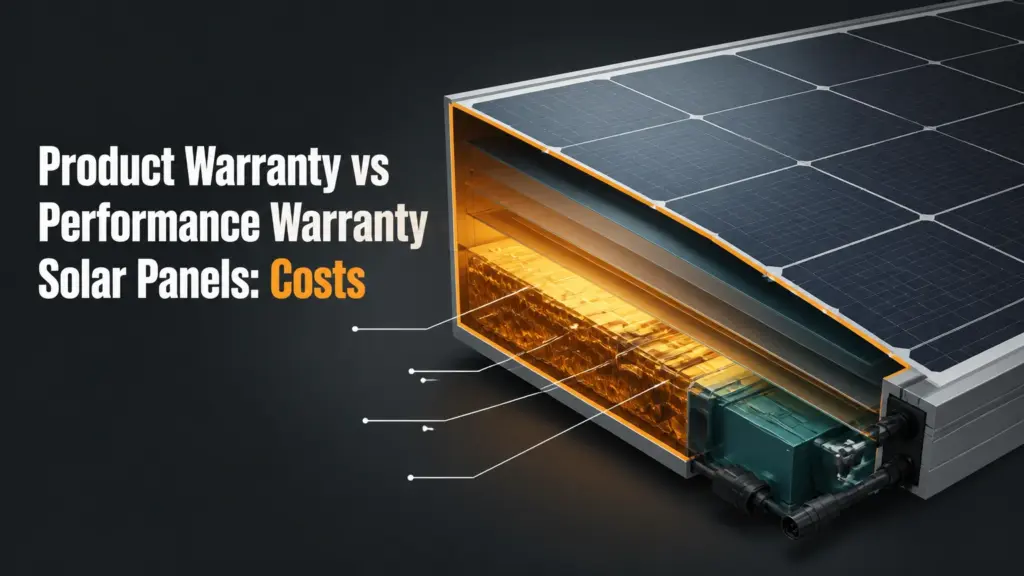
A product warranty protects a solar panel against defects in materials and workmanship, while a performance warranty protects its electrical output against excessive degradation. Product coverage usually lasts 12-25 years; performance coverage commonly lasts 25-30 years. Neither warranty automatically pays every labor, shipping, roof-access, or diagnostic cost. Key Facts at a Glance What Does Each […]
Water Filter for Heavy Metals: Choose the Right System
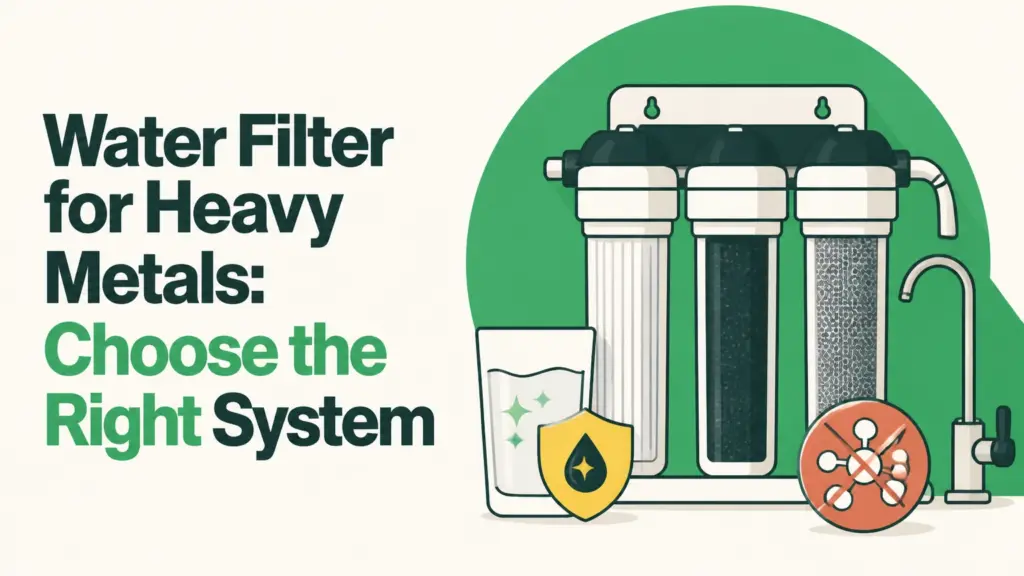
A water filter for heavy metals reduces contaminants such as lead, arsenic, mercury, cadmium, chromium, and copper through adsorption, ion exchange, specialized media, or reverse osmosis. The best choice depends on the measured metal, its chemical form, concentration, water pH, flow requirement, and whether treatment is needed at one drinking tap or throughout the home. […]
Water Conditioner vs Water Softener: Which Fits Your Home?

A water softener removes calcium and magnesium through ion exchange, while a water conditioner leaves those minerals in the water and reduces their tendency to form scale. Choose a softener for measurable hardness reduction, soap performance, and high-hardness water; choose a conditioner for scale control without salt, brine discharge, or a slippery water feel. Key […]
String Inverter vs Microinverter: Which Fits Your Roof?
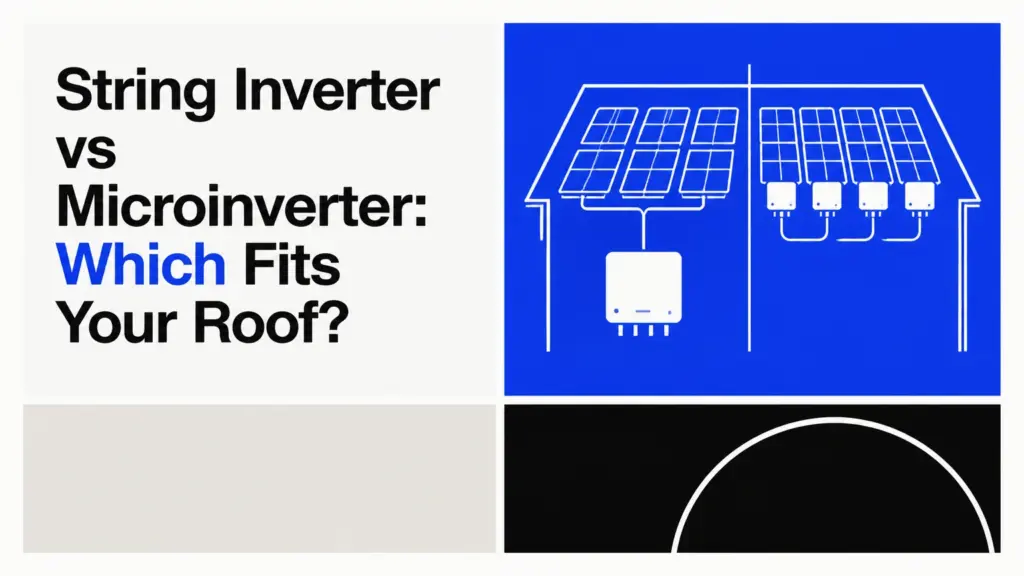
A string inverter usually costs less and works best on a simple, unshaded roof with consistent panel orientation. A microinverter costs more but independently optimizes each panel, making it better for shade, multiple roof planes, detailed monitoring, and future expansion. Battery design, local electrical rules, and installer quality can change the final choice. Key Facts […]
Solar Panel kW vs kWh: Size Output, Energy, and Storage
Solar panel kW measures instantaneous electrical power, while kWh measures the total energy produced or consumed over time. A 6 kW solar array can deliver up to about 6 kW under specified test conditions, but its daily production might be 18-30 kWh depending on sunlight, orientation, temperature, shading, and system losses. Key Facts at a […]
Water Softener Salt Bridge Symptoms: How to Fix Them

Water softener salt bridge symptoms include returning hard water, a salt level that does not fall, a hollow sound inside the brine tank, and a rigid crust over empty space. A salt bridge prevents water from dissolving salt, so the softener cannot produce brine and regenerate its resin. Most bridges can be removed safely in […]
Solar Panel Voltage vs Wattage: How to Choose Correctly
Solar panel voltage is the electrical potential available to push current, while wattage is the panel’s power output, calculated as voltage multiplied by current. Voltage determines equipment compatibility and wiring design; wattage indicates how much power the panel can deliver at a given moment. Both values matter, but they answer different questions. Key Facts at […]
Solar Panel Wattage Comparison: Choose the Right Size
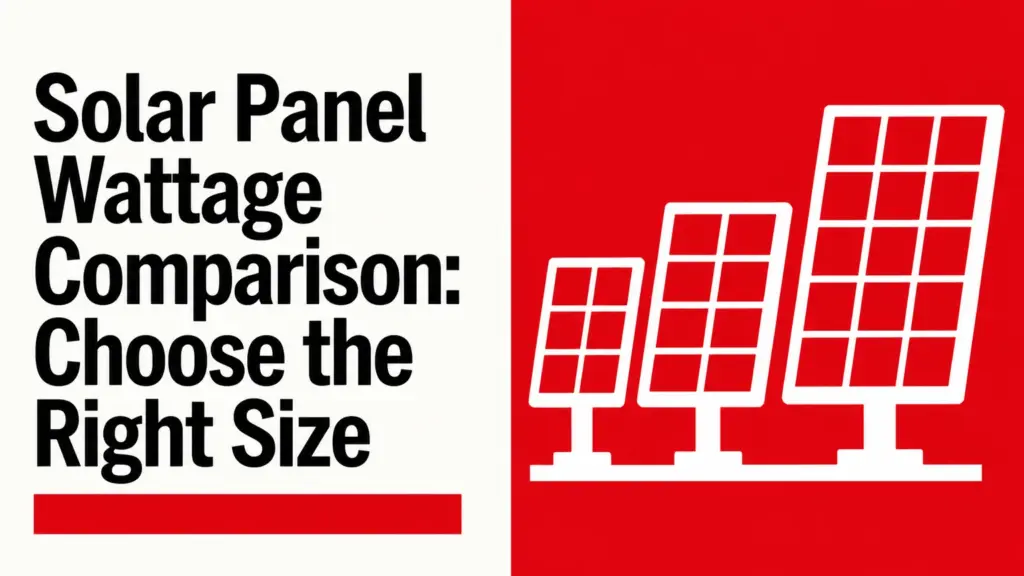
Solar panel wattage comparison shows how much peak DC power different modules can produce, but wattage alone does not determine daily energy, value, or suitability. A 500W panel usually produces more power per module than a 400W panel, yet roof dimensions, temperature, shading, inverter limits, price per watt, and annual energy yield determine the better […]
Solar Panels for Hot Climates: Choose for Heat
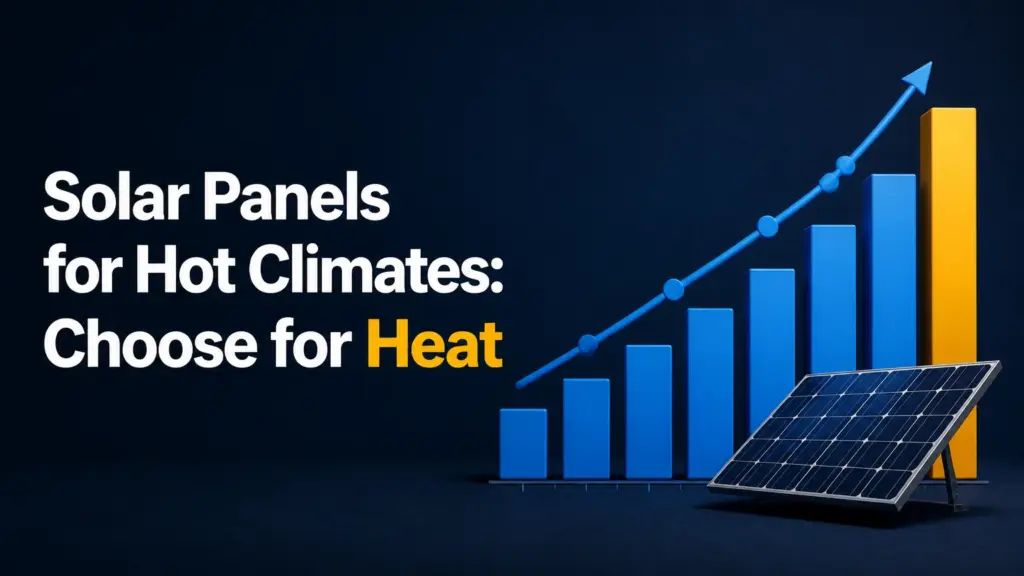
Solar panels for hot climates are photovoltaic modules and systems selected to limit heat-related power loss, resist ultraviolet, humidity, dust, and wind exposure, and maintain safe electrical operation. The best choice is usually a high-efficiency panel with a low temperature coefficient, adequate rear ventilation, durable encapsulation, and an inverter installed away from direct afternoon heat. […]