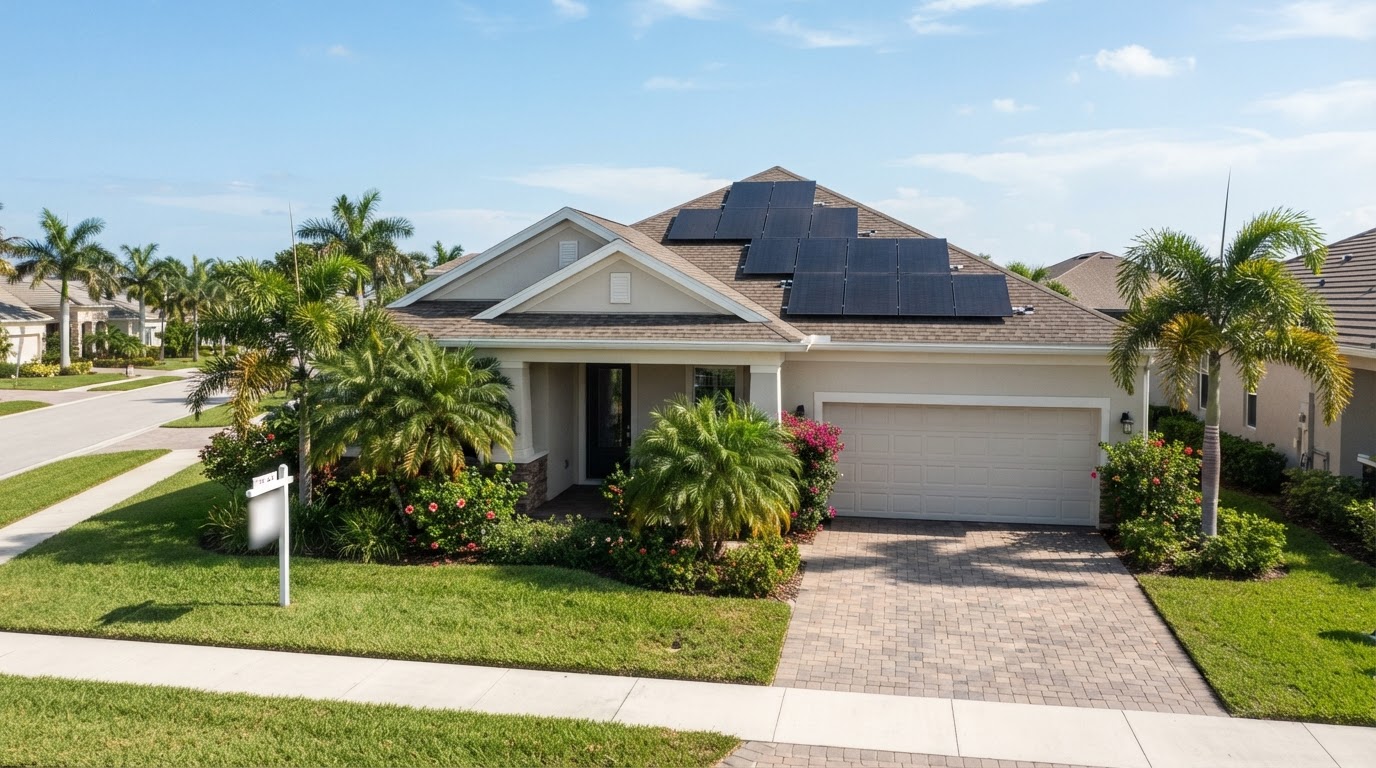
Buying a Florida home with solar panels can be a valuable opportunity, but an attractive roof array does not automatically mean that the equipment is owned, working properly or free of obligations. A buyer should approach the solar system as part of both property due diligence and long-term energy planning. Verify who owns the system, what financing remains, whether the roof is in good condition, how much energy the equipment produces, and whether the utility can activate net metering in your name.
Determine whether the solar system is owned, financed or leased
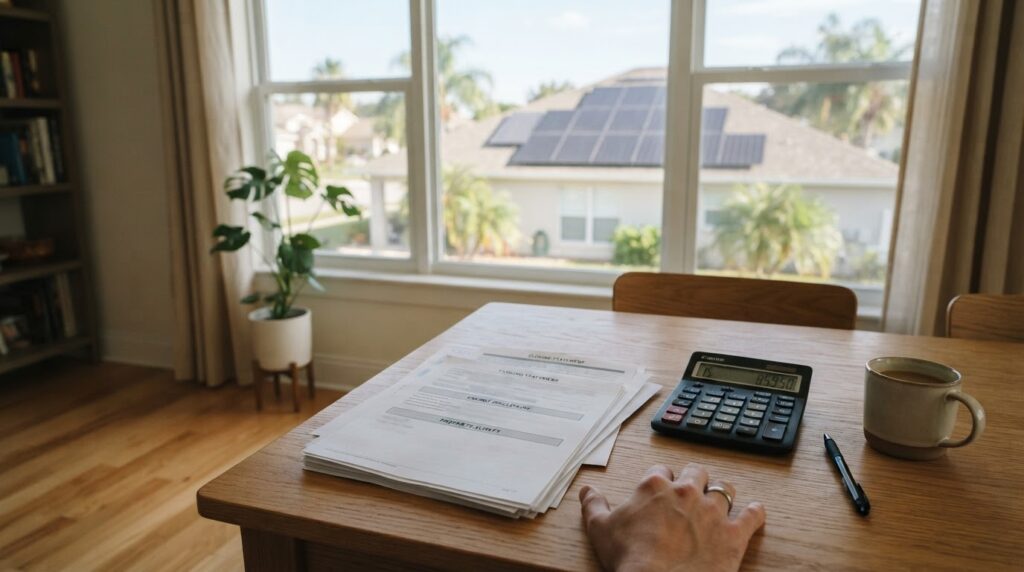
A cash-owned array with no outstanding security interest is different from a solar loan, a lease or a third-party power purchase arrangement. Ask the seller for the signed agreement, current balance or payoff statement, ownership documentation and any filing associated with the equipment. A lease may have transfer qualifications and ongoing payments. A loan may require payoff or lender consent. Fannie Mae’s selling guide treats ownership and financing arrangements differently; a PACE assessment must be paid before or at closing for delivery eligibility. Your mortgage lender and closing or title professional should determine the requirements for your transaction. Read our solar leasing comparison before agreeing to assume an obligation.
Get a solar-specific inspection and production history
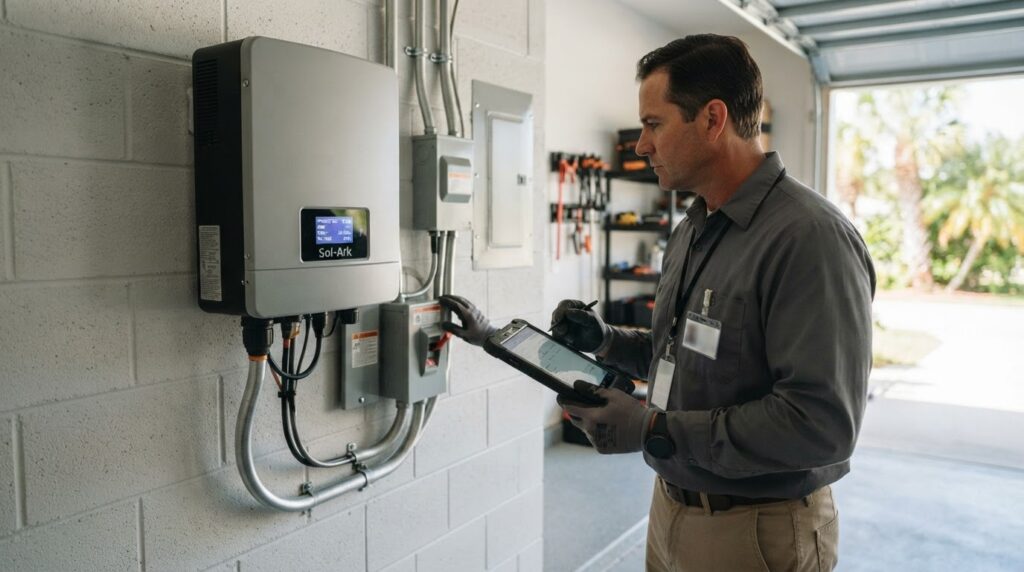
A general home inspection is useful but may not establish array output or inverter health. Request at least 12 months of production history, utility bills, equipment model numbers, commissioning records and repair invoices. A qualified solar professional can evaluate visible mounting condition, electrical equipment, monitoring, and whether the system is delivering reasonably expected production for its age and site. If the seller cannot provide app access or data, do not treat a verbal savings estimate as evidence. Compare historical production in kWh rather than simply the previous owner’s monthly bill: the new owner’s consumption and utility rate can be quite different. Our solar diagnostic guide explains professional assessment scope.
Assess roof life, insurance and warranty transfer
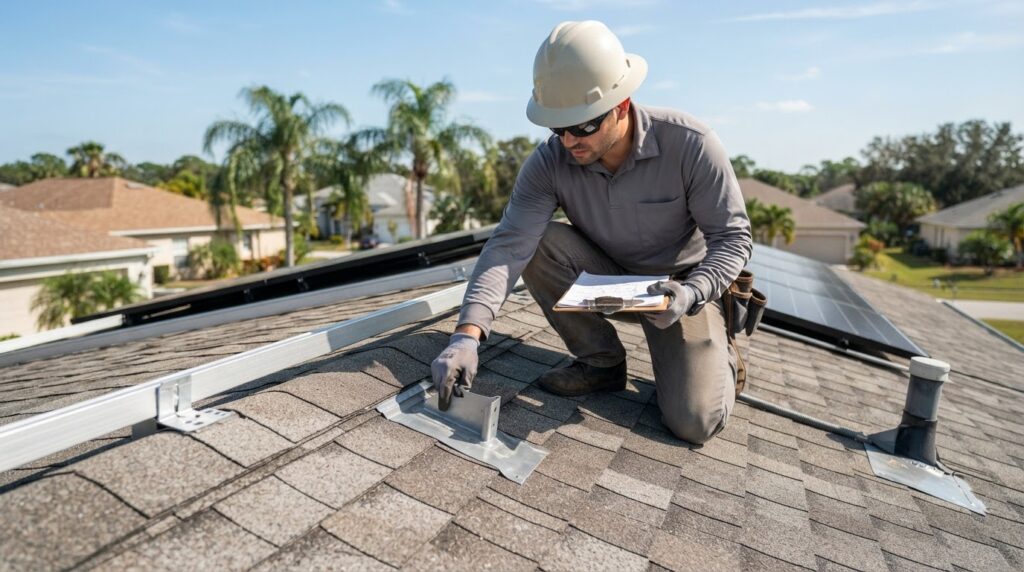
Florida roof age matters for homeowners insurance as well as future solar labor. Ask for the roof installation date, permits, material, previous repairs and any water intrusion history. If reroofing is imminent, include possible solar detach-and-reset expenses in your budget. Obtain insurance quotes using the actual roof and array information before closing. Confirm panel, inverter, workmanship and roof penetration warranties separately: some transfer automatically, while others require paperwork or a fee. A system’s app credentials and monitoring subscription may need transfer as well. Our solar warranty comparison and roof planning article can help organize these questions.
Set up utility service and estimate value conservatively
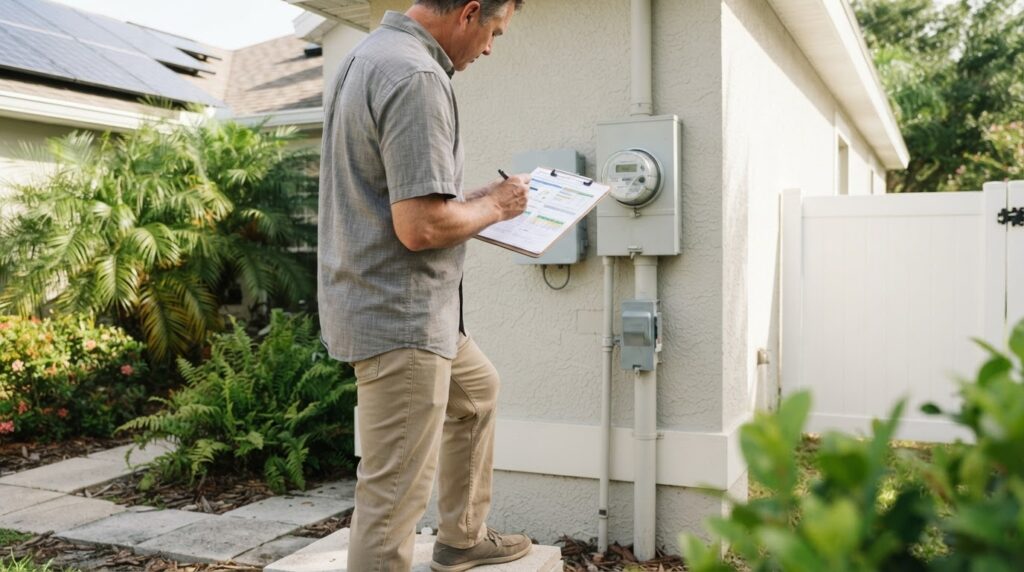
Contact your electricity provider before closing to ask how an existing approved solar system is activated in a new owner’s name. FPL provides an existing-system activation route and requires an interconnection agreement for customer-owned generation. If capacity has changed, additional details may be necessary. OUC and Duke service territories have their own rules. The solar purchase premium should be based on condition, ownership, local comparable sales and realistic energy benefit, not the seller’s original installation cost. For financed or leased equipment, use the lender’s appraisal policy; Fannie Mae does not treat third-party-owned leased panels as appraised real estate value. See solar panels and home value for broader context.
Frequently Asked Questions
Who owns solar panels when I buy a house?
It depends on the original contract and closing arrangements. Verify ownership, outstanding debt and any transfer conditions with the title and lending professionals.
Can I use the solar immediately after closing?
A functioning system may still require utility account and monitoring transfers. Follow the utility’s activation procedure.
Can I negotiate for a solar loan payoff?
The parties can negotiate contractual terms, but the lender and title company must confirm the necessary payoff and release documentation.
Planning Your Next Step
Before you close on a Florida property with an existing array, consider requesting a solar evaluation from SunGo Energy Company so you understand the equipment you are acquiring. Contact our team or explore our solar solutions.