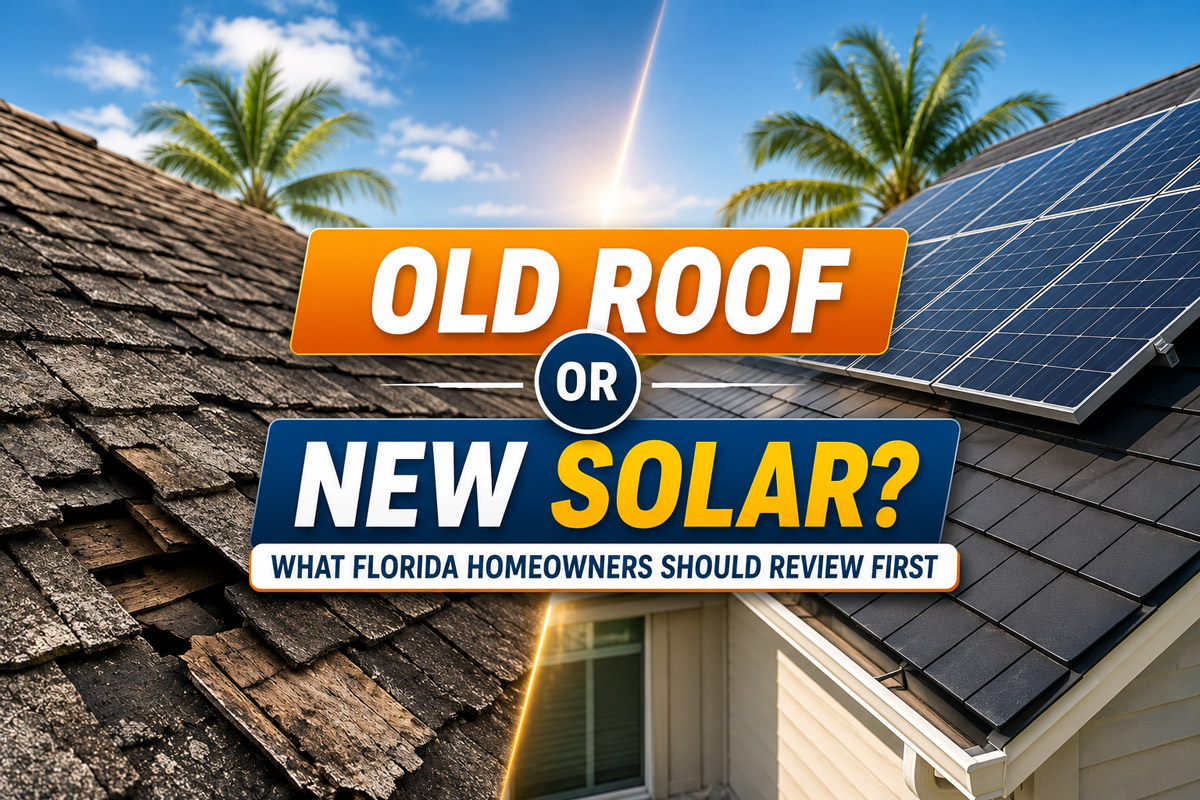
If you are asking yourself, “Should I replace my roof before solar panels in Florida?” the short answer is almost always yes if your roof is more than 10 years old or showing signs of wear.
Solar panels carry a design life of 25 to 30 years. Mounting brand-new, long-term energy technology on top of a roof that is already past its prime creates an expensive bottleneck down the road. While this rule applies anywhere, the unique legal, environmental, and insurance environment in Florida makes roof condition an absolute priority before going solar.
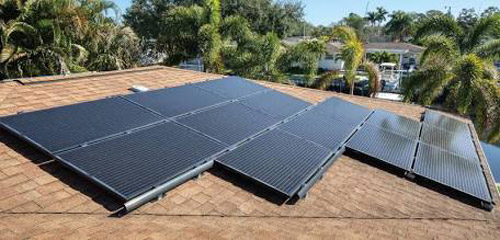
Source: SolarReviews
Why the “Florida Factor” Changes the Rules
In many states, placing solar panels on a 12-year-old roof is merely a minor financial gamble. In Florida, however, it can trigger severe insurance cancellations, failed building permits, and thousands of dollars in unexpected labor fees.
1. Homeowners Insurance Realities
Florida’s home insurance market operates under distinct and strict rules. Florida law technically prohibits insurance carriers from dropping a policyholder solely because an asphalt shingle roof is under 15 years old. However, local insurance carriers frequently work around this by hiking premiums significantly, requiring mandatory roof inspections, demanding full replacements, or refusing to issue new policies if an architectural shingle roof passes the 10 to 12-year mark.
If you install solar panels on a 12-year-old roof today, your insurer may demand a roof replacement in just two or three years. Ignoring the age of your roof prior to solar installation puts your home coverage directly at risk.
2. High “Detach and Reset” Costs
When a roof reaches the end of its functional life, you cannot simply lay new shingles or tiles around existing solar panels. The solar array must be completely decommissioned before roofing work can begin.
This process, known in the industry as “detach and reset,” requires hiring certified solar technicians to perform the following steps:
- Carefully unmount and remove all photovoltaic panels.
- Disassemble racking systems, brackets, and electrical wiring.
- Safely store the solar equipment on-site during roofing construction.
- Reinstall and re-commission the entire solar system once the new roof passes final inspection.
In Florida, a standard detach and reset service typically costs between $3,000 and $6,000. That single out-of-pocket expense can instantly wipe out three to five years of solar electricity savings.
3. Hurricane Wind Load and Strict Building Codes
Florida features some of the most stringent building codes in the nation, particularly regarding High-Velocity Hurricane Zones (HVHZ). Solar arrays act as giant sails during tropical storms and hurricanes, placing immense uplift force on your roof structure.
To secure a required structural building permit, a licensed Florida engineer must verify that your roof deck, trusses, and existing surface can withstand the combined load of the panels and wind forces up to 150+ mph. If your underlying roof decking is rotted, brittle, or structurally compromised, your project will fail municipal inspection immediately.
The Roof Timeline Decision Matrix
To determine whether your current roof can support a 25-year solar investment, use this decision framework tailored to Florida homes:
| Roof Age & Condition | Recommended Action Plan | Primary Justification |
|---|---|---|
| 0 to 7 Years Old (Good condition) | Install Solar Now | Roof lifespan aligns well with the 25-year panel lifecycle. Low risk of insurance forced replacements. |
| 8 to 12 Years Old (Nuanced) | Inspect & Lean Toward Replacing | High risk of insurance-forced roof replacement or reaching end-of-life midway through solar ownership. |
| 13+ Years Old (Or visible damage) | Replace Roof First | Near-certain financial guarantee that you will pay thousands later for detach-and-reset services if unaddressed now. |
Strategic Upgrades for Florida Homeowners Going Solar
If an evaluation indicates that you should replace your roof before installing solar panels in Florida, several proactive upgrades can save you money and protect your home over the long haul.
Consider a Material Upgrade: Standing Seam Metal
While asphalt shingles remain popular, switching to a standing seam metal roof is one of the smartest investments for Florida solar installations.
Metal roofs offer substantial advantages:
- Lifespan Alignment: Standing seam metal roofs last 40 to 70 years, easily outlasting the 25 to 30-year operational life of solar panels.
- Zero Roof Penetrations: Solar racking clamps directly onto the raised seams of the metal panels. Installers do not need to drill holes through your roof decking, eliminating potential water leak points during heavy Florida rainstorms.
- 1 40 to 70-year lifespan outlasts solar panel equipment.
- 2 Direct seam-clamping eliminates penetration holes in decking.
- 3 Superior wind resistance against severe tropical storms.
Look for Bundled Roofing and Solar Contractors
Navigating two separate contractors for roofing and solar can lead to scheduling delays and finger-pointing if a leak occurs later.
In Florida, an increasing number of specialized contractors hold dual licenses as both Certified Roofing Contractors (CCC) and Certified Solar Contractors (CVC). Hiring a single company to manage both jobs provides critical benefits:
- Unified Permitting: One contractor handles structural engineering, electrical permits, and municipal roof inspections.
- Single Workmanship Warranty: You receive one comprehensive warranty covering both the roof installation and the solar array attachments. If a issue ever arises, there is no debate over which trade was responsible.
- Streamlined Financing: Many dual contractors allow you to combine the roof replacement and solar system into a single financing package or loan.
Check Shingle Warranty Fine Print
If you decide to stay with high-grade architectural asphalt shingles, select a top-tier manufacturer product line rated for high wind speeds.
Before signing a roofing contract, review the manufacturer warranty details closely. Verify that the shingle warranty explicitly remains valid when solar racking penetrations and flashing kits are installed according to manufacturer specifications.
Critical Steps Before Signing a Solar Contract
Before committing to any solar installation contract in Florida, follow these recommended steps to protect your investment:
- Obtain an Independent Roof Inspection: Do not rely solely on a solar sales representative’s visual assessment. Hire an independent, licensed roofing contractor to evaluate the remaining lifespan of your shingles, underlayment, and roof decking.
- Consult Your Insurance Agent: Call your homeowners insurance provider to ask how adding solar panels—and the age of your current roof—will impact your coverage, premiums, and policy renewal requirements.
- Verify Contractor Licenses: Always confirm that your chosen contractor is properly licensed and insured in the state of Florida via the Department of Business and Professional Regulation (DBPR).
By evaluating your roof age, local insurance conditions, and hurricane structural demands beforehand, you ensure that your transition to clean energy in Florida remains profitable, secure, and hassle-free for decades to come.