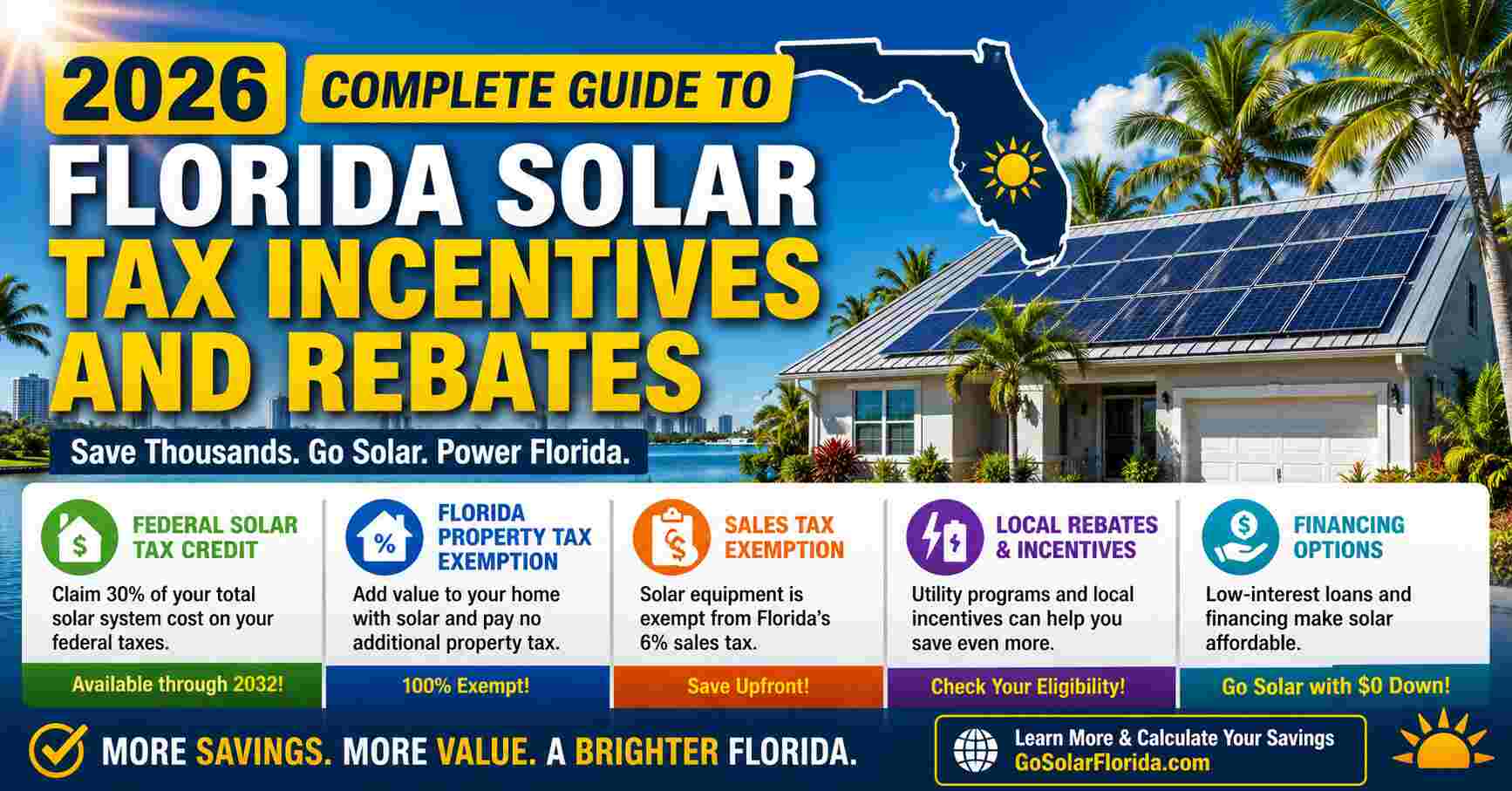
Florida continues to shine as a premier market for renewable energy adoption. Known as the Sunshine State, it offers abundant natural sunlight and a highly favorable regulatory environment for property owners. However, the financial landscape for renewable energy buyers completely transformed recently. If you are planning a residential or commercial project this year, understanding the shifting policies is critical to maximizing your overall return on investment.
With significant changes at the federal level, local state laws now take center stage. Our 2026 Complete Guide to Florida Solar Tax Incentives and Rebates breaks down exactly how to navigate the current market. We will explore structural state tax exemptions, updated utility net metering policies, and creative financing methods to ensure you secure the absolute best deal possible. Assume control of your energy future by leveraging the exact frameworks detailed below.
Maximize Financial Exemptions with Florida Solar Incentives
Historically, buyers relied heavily on federal subsidies to offset their upfront costs. Today, the optimal strategy requires maximizing state specific benefits. Florida provides two primary permanent tax exemptions that drastically lower the financial barrier to entry. Because the state does not charge personal income tax, these structural exemptions act as the primary financial mechanism to encourage clean energy adoption.
100 Percent Property Tax Exemption
Adding a high quality energy system to your roof significantly increases your property value. In a standard real estate scenario, increasing your home equity triggers a reassessment by the county property appraiser. This reassessment usually results in a higher annual property tax bill.
Fortunately, the Florida property tax exemption for solar entirely protects homeowners from this financial penalty. Under Florida Statutes Section 196.182, any added value resulting from renewable energy equipment is explicitly excluded from your property tax assessment. You get to enjoy increased equity when you eventually sell your home without paying higher annual holding costs in the meantime. This protection applies to both solar panels and qualifying battery storage additions.
6 Percent State Sales Tax Savings
The upfront cost of renewable hardware can be substantial. To alleviate this burden, the state provides a complete Florida solar sales tax exemption. Outlined in Section 212.08 of the Florida Statutes, this law completely waives the 6 percent state sales tax on all eligible hardware purchases.
This exemption applies directly at the point of sale. If you purchase a setup for thirty thousand dollars, you instantly save eighteen hundred dollars right at the register. The exemption covers solar panels, inverters, racking equipment, and qualifying battery storage hardware.
Navigating Net Metering Florida 2026 and System Tiers
Generating electricity is only half the battle. How your local utility compensates you for excess power dictates your true financial payoff. Florida net metering rules mandate that investor owned utilities buy back your excess electricity.
Companies like Florida Power and Light, Duke Energy, and Tampa Electric Company must offer 1 to 1 retail rate credits for the power you send back to the grid. If you generate more electricity than you consume during the peak afternoon hours, that excess power spins your meter backward. You can then use those banked credits at night when your panels are dormant.
Understanding System Class Regulations
Florida categorizes grid interconnections based on the total direct current size of your system. Staying within the optimal tier reduces bureaucratic friction and eliminates recurring insurance costs.
Keeping residential arrays under 10 kilowatts ensures a streamlined grid interconnection process with zero recurring personal insurance costs. Moving past 10 kilowatts into Tier 2 incurs a grid hookup fee and requires keeping an active one million dollar personal liability insurance policy, which slightly increases your annual operating cost.
Utility Interconnection Rules by Region
Your utility provider determines your long term return on investment, not your county borders. Different utilities span across various county lines and operate under different compensation frameworks.
Federal Solar Tax Credit Updates: Section 25D and Section 48E
The most significant shift for buyers this year revolves around the Section 25D expiration. The federal Residential Clean Energy Credit previously allowed homeowners to deduct 30 percent of their installation costs directly from their personal income tax liability.
Because the residential federal solar tax credit expired at the end of 2025, standard homeowners filing personal tax returns can no longer claim this 30 percent credit for new direct purchases. If you buy your panels with cash or a standard loan in 2026, the financial math shifts entirely to offsetting utility bills.
Capitalizing on the Section 48E Commercial Credit
While standard personal tax credits expired, alternative project structures unlock massive federal funding. The Section 48E Commercial Credit offers a 30 percent baseline tax credit for third party owned systems, commercial projects, or power purchase agreements active through 2027.
By opting for a Solar Power Purchase Agreement or a solar lease, a commercial solar provider owns the hardware on your roof. Because they operate as a business entity, they can legally claim the 30 percent Section 48E Clean Electricity Investment Tax Credit. The developer then passes a portion of those federal savings down to you via substantially lower monthly energy bills.
Developers must have initiated construction or safe harbored their solar equipment before July 4, 2026, to guarantee full 30 percent commercial credit eligibility. Working with an established, well capitalized developer ensures they successfully hit these safe harbor inventory deadlines, translating to lower monthly rates for your home.
Local County Rebates and PACE Financing Florida
Every single one of Florida’s 67 counties is bound by Florida State Statutes, ensuring uniform tax savings statewide. Because Florida does not have county by county solar tax credits, the exact geographical location of your county dictates your financial benefits through two main factors: local municipal rebates and active PACE Financing providers.
Florida Municipal Solar Rebates
A few independent city jurisdictions located within specific counties offer targeted, hyper local cash rebates to offset installation costs:
- Boynton Beach Energy Edge Rebate Program: Located in Palm Beach County, this initiative offers up to fifteen hundred dollars in cash rebates for energy efficiency installations, including structural solar upgrades on primary residences.
- Dunedin Solar Energy Grant Program: Located in Pinellas County, this program grants a financial rebate of 75 cents per watt up to a maximum of twenty five hundred dollars for residents installing qualifying renewable installations.
Understanding PACE Financing Access by County
Property Assessed Clean Energy allows eligible property owners to fund 100 percent of their solar and roof upgrades with no money down. The balance is tied directly to the property and repaid through a voluntary assessment item on your annual county property tax bill. Because PACE programs are governed at the local level, counties must explicitly approve specific districts to operate within their borders.
Projecting Your Solar ROI and Payback Timeline in 2026
Because homeowners cannot claim a personal federal tax credit in 2026, the financial math for direct purchases shifts entirely to avoiding utility bill inflation. A standard 10 kilowatt residential system ranges between twenty two thousand and twenty eight thousand dollars upfront before state tax exemptions.
Without the 30 percent personal tax credit, standard payback periods for cash purchases have lengthened from 7 to 9 years up to 11 to 13 years. However, steep utility rate hikes across the state constantly help shorten this window over time. Alternatively, utilizing a Power Purchase Agreement offers immediate day one savings with zero out of pocket costs.
Defending Against Power Outages with Battery Storage
Florida net metering laws protect your financial production, but they do not provide backup power during a grid failure unless specialized battery equipment is added.
Standard grid tied solar systems automatically shut down during a power outage. This mandatory safety feature prevents your panels from sending electricity down active power lines where utility crews are actively working to restore the grid.
While batteries add ten thousand to fifteen thousand dollars to your total project cost, they qualify for the exact same tax treatment as your solar panels. Energy storage systems are 100 percent exempt from Florida state sales tax and absolutely do not increase your annual property tax assessment.
Spotting Predatory Sales Tactics
The massive shift in tax policy has dramatically altered local sales environments, making it vital to spot misleading information to protect your household finances.
First, be highly cautious of door to door sales representatives claiming the government will pay for your roof or install solar completely free. These are typically standard solar leases or high interest loans rebranded with aggressive marketing terminology.
Second, thoroughly vet any contractor claiming you can still personally write off 30 percent of your system cost on your individual 2026 IRS tax return. This personal tax credit under Section 25D has legally expired for direct residential purchases. Always demand clear, written documentation of any financial promises made during a consultation.
Conclusion
Transitioning to renewable energy in 2026 requires a slightly different approach than in previous years, but the financial logic remains exceptionally strong. By combining the Florida property tax exemption with the state sales tax waiver, you instantly eliminate significant financial hurdles. Furthermore, engaging with reliable investor owned utilities guarantees you receive fair 1 to 1 retail compensation for the clean electricity you generate.
While the Section 25D expiration changed the direct ownership math, leveraging the Section 48E commercial credit through a well structured Power Purchase Agreement offers a seamless path to immediate monthly savings. The key to maximizing your investment is aligning your financing choice with your long term homeownership goals and acting before crucial federal safe harbor deadlines pass.
Take the Next Step Toward Energy Independence
Do not let fluctuating utility markets dictate your household budget. Take control of your electricity costs today by working with a certified local expert who deeply understands the precise nuances of the 2026 tax code.
Contact our dedicated team today for a free, customized home energy consultation. We will help you confidently navigate local PACE financing, compare commercial PPA options, and design a customized solar system that maximizes every single available financial incentive in your specific county.