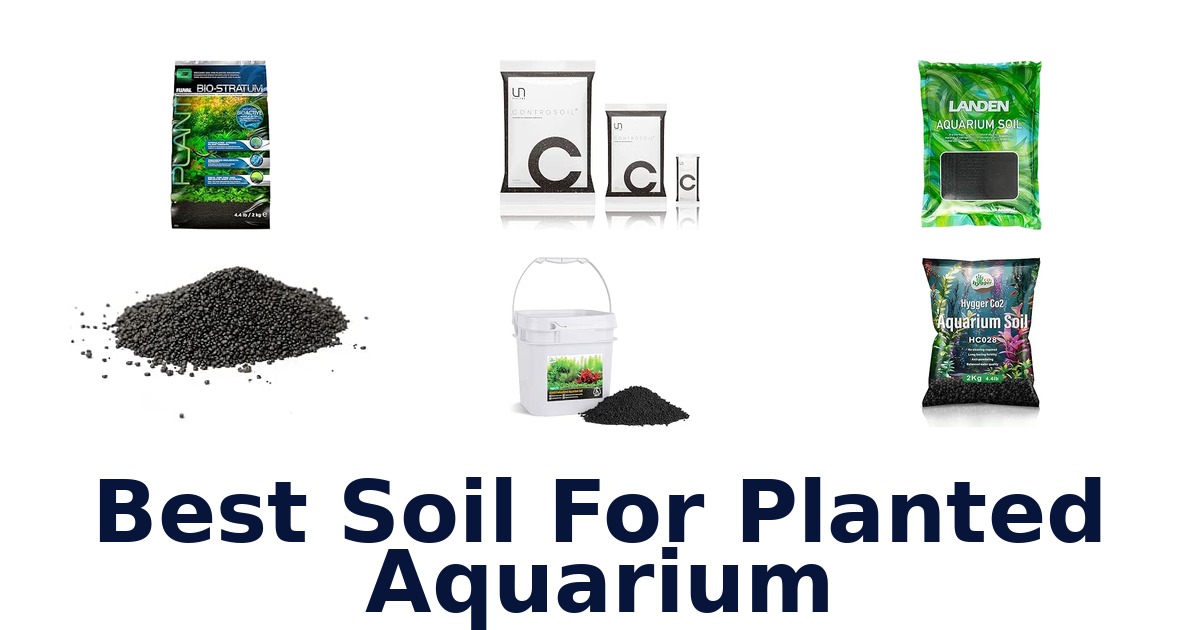
A strong planted-aquarium soil supports root growth, provides useful nutrients, and suits the water conditions and livestock in your tank. Fluval Plant and Shrimp Stratum is the strongest all-around fit in this group, with a porous, non-compacting structure and a listed 8.8-pound bag. Other options serve narrower needs: FZONE offers an 18-pound no-rinse format, while ShrimpSoil Pro targets Caridina shrimp and a distinctly acidic pH range.
These products differ in their listed materials, buffering claims, and package sizes, so compare those details before choosing. Aquarium soil may also affect water chemistry during setup, and product directions matter; some listings specifically advise delaying livestock introduction or changing water.
The right substrate is therefore the one that fits your plants, inhabitants, and setup plan—not simply the largest bag.
Fluval Plant and Shrimp Stratum is the best overall choice in this selection because it is expressly intended for planted freshwater aquariums and shrimp, encourages roots to spread, and has a porous structure for beneficial bacteria. Its listed 8.8-pound bag also gives more substrate than several smaller options. If you need no-rinse soil, a larger package, or a specific pH buffer, compare the alternatives below against your aquarium inhabitants and setup requirements.
Our Top Picks
 Best Overall
Fluval Plant and Shrimp Stratum
Its planted-freshwater and shrimp focus, root-penetrable porous structure, and 8.8-pound bag make it a well-rounded choice for many setups.
View on Amazon Largest Listed Bag
The 18-pound listing combines nutrient-rich ingredients, 3 mm porous granules, debris capture, pH-lowering claims, and a no-rinse format.
View on Amazon Low-Ammonia Pick
Ultum Nature Systems Controsoil
This freshwater soil is listed with volcanic ash, low ammonia release, pH and kH buffering, and no-rinse use for planted tanks.
View on Amazon- Clay-Based Pick Aqueon Plant and Shrimp Substrate
- Caridina Specialist Rare Shrimp ShrimpSoil Pro
Compare aquarium soils by setup and livestock needs
| # | Product | Weight | Buy |
|---|---|---|---|
| 1 | 1. Fluval Plant and Shrimp StratumBest Overall | 4 kg | View on Amazon |
| 2 | 2. FZONE Aquarium SoilLargest Listed Bag | — | View on Amazon |
| 3 | 3. Ultum Nature Systems ControsoilLow-Ammonia Pick | — | View on Amazon |
| 4 |  4. LANDEN Aquarium Substrate SoilMixed-size natural planted substrate | 10 lb | View on Amazon |
| 5 |  5. Aqueon Plant and Shrimp SubstrateClay-Based Pick | 5 lb | View on Amazon |
| 6 |  6. Fluval Volcanic Soil Bio StratumBiological support for new tanks | 4.4 lb | View on Amazon |
| 7 |  7. Hygger CO2 Premium Aquarium SoilDust-free nutrient-rich setup | — | View on Amazon |
| 8 |  8. Hygger CO2 Upgraded Aquarium SoilStable-range shrimp aquascapes | 1928 g | View on Amazon |
| 9 |  9. Rare Shrimp ShrimpSoil ProCaridina Specialist | — | View on Amazon |
| 10 |  10. Hewnda Freshwater Aquarium SubstrateCompact planted propagation beds | 2.11 lb | View on Amazon |
Detailed Reviews: Best Soil For Planted Aquarium
#1 · Best Overall
1. Fluval Plant and Shrimp Stratum
- Weight: 4 kg
Best for: Rooting plants and biofiltration.
Why it ranks #1: Its planted-freshwater and shrimp focus, root-penetrable porous structure, and 8.8-pound bag make it a well-rounded choice for many setups.
A light, porous, non-compacting structure gives plant roots room to penetrate and spread while providing surfaces for beneficial nitrifying bacteria. Fluval Plant and Shrimp Stratum suits freshwater keepers who want substrate support for both plant establishment and biological filtration in one granulated base.
Roots can spread through the substrate and reach readily available nutrients, supporting a planted layout without a compacting bed getting in their way. Its porous structure also gives beneficial nitrifying bacteria a place to colonize, contributing to biological filtration. The granules are collected from the mineral-rich foothills of Japan’s Mont Aso Volcano. Fluval notes that Plant Micro Nutrients can provide a full complement of essential macro- and micronutrients, so this soil may be part of a broader nutrient routine.
- Porous, non-compacting granules support root spread
- Provides a surface for nitrifying bacteria to colonize
- Supports freshwater aquatic plant growth
- Fluval identifies Mont Aso foothills as its source
- Fluval recommends Plant Micro Nutrients for a full complement of macro- and micronutrients.
Skip it if you want an explicitly no-rinse substrate; Ultum Nature Systems Controsoil states that rinsing is not required.
Choose this Fluval substrate for a freshwater planted tank where root penetration and bacterial colonization are priorities. It is a 4 kg granulated soil, and its nutrient guidance points to adding Plant Micro Nutrients for a fuller nutrient complement.
Full product details
| Brand | Fluval |
|---|---|
| Included Components | All Items listed in Description |
| Item Form | Granules |
| Item Weight | 4 kg |
| Manufacturer | Rolf C. Hagen (USA) Corp. |
| Part Number | 12694 |
| Model Number | 12694 |
| Warranty Description | Manufacturer warranty. |
| Additional Information | Important information Indications pH Support Ingredients Volcanic Soil Directions Follow individual packaging instructions. |
Listed on Amazon as: Fluval Plant and Shrimp Stratum Aquarium Substrate – 8.8 lb Bag
View on Amazon#2 · Largest Listed Bag
2. FZONE Aquarium Soil
Best for: No-rinse planted-tank setup.
Why it ranks #2: The 18-pound listing combines nutrient-rich ingredients, 3 mm porous granules, debris capture, pH-lowering claims, and a no-rinse format.
FZONE’s no-rinsing aquarium soil pairs that setup convenience with 3 mm porous granules, enabling a planted-tank workflow that avoids a pre-use rinse while supporting root growth. Its organic-matter, activated-carbon, silica, soil, and mineral blend also provides nutrients for a planted aquarium ecosystem.
The 3 mm porous granules support root growth and capture suspended debris, linking substrate structure with both plant support and water clarity. The soil is also described as gently lowering pH by absorbing alkaline ions, a relevant consideration when planning water conditions. Its blend includes organic matter, activated carbon, silica, soil, and minerals. No-rinsing use simplifies preparation, while the supplied safety information advises avoiding skin and eye contact, washing hands, and using it in a well-ventilated area.
- No-rinsing substrate
- 3 mm porous granules support root growth
- Granules capture suspended debris
- Blend includes organic matter, activated carbon, silica, soil, and minerals
- The soil gently lowers pH, which may not suit a setup that does not need that adjustment.
Skip it if you need a clay substrate specified to maintain its shape; Aqueon Plant and Shrimp Aquarium Substrate has spherical clay granules.
Pick FZONE for a planted tank where no-rinse setup, porous root-supporting granules, and debris capture suit your workflow. Its pH-lowering action is an important fit consideration, so account for that when choosing substrate for your water conditions.
Full product details
| Brand | FZONE |
|---|---|
| Manufacturer | Shenzhen Kinwayn Tech Co., Ltd |
| Model Number | FZ-SOIL8L |
| Style | Aquarium Soil |
| Style Name | Aquarium Soil |
| Additional Information | Important information Safety Information May cause irritation to skin and eyes. Avoid contact and wash hands thoroughly after handling. Keep out of reach of children and pets. Do not ingest. Use in a well-ventilated area to avoid inhalation. |
Listed on Amazon as: FZONE Aquarium Soil for Planted Tanks,No Rinsing Aquarium Substrate 8L/18lb
View on Amazon#3 · Low-Ammonia Pick
3. Ultum Nature Systems Controsoil
Best for: Low-ammonia aquascaping substrate.
Why it ranks #3: This freshwater soil is listed with volcanic ash, low ammonia release, pH and kH buffering, and no-rinse use for planted tanks.
Low ammonia release and a stated 6.8 pH target make Ultum Nature Systems Controsoil a focused choice for freshwater aquascapes with plants, fish, or shrimp. Its soil-and-volcanic-ash blend requires no rinsing and is described as absorbing impurities to help clarify cloudy water.
The granule composition and sizes are described as supporting oxygen exchange and supplying nutrients for aquatic plants, linking the substrate structure to planting needs. Controsoil is also specified for freshwater fish and shrimp that prefer slightly acidic water, with a 6.8 pH designation and low ammonia release. No-rinse use simplifies preparation, while active absorption of impurities is presented as a way to clarify and detoxify cloudy water during aquarium setup.
- Granule composition and sizes support oxygen exchange
- Provides nutrients for aquatic plants
- Low ammonia release
- No rinsing required and absorbs impurities
- Its 6.8 pH designation may not suit buyers targeting a distinctly more acidic range.
Skip it if you need a lower stated pH range for Caridina; Rare Shrimp ShrimpSoil Pro lists a stable pH of 5.2–5.8.
Controsoil suits freshwater aquascapers seeking plant-supporting granules, low ammonia release, and no-rinse preparation. Its 6.8 pH designation is a key fit boundary for keepers whose fish or shrimp require a lower stated range.
Full product details
| Brand | Ultum Nature Systems |
|---|---|
| Manufacturer | Marfied |
| Part Number | CON0103C |
| Model Number | CON0103C |
| Additional Information | Important information |
Listed on Amazon as: Ultum Nature Systems Controsoil – Freshwater Aqua Soil Substrate for Fish, Shrimp, Live Plant Propagation and Aquascaping – 6.8pH Low Ammonia, Volcanic Ash – Black, Normal (3 Liter)
View on Amazon#4
4. LANDEN Aquarium Substrate Soil
- Weight: 10 lb
Best for: Mixed-size natural planted substrate.
Why it ranks #4: Its natural soil provides minerals and trace elements, and the listing identifies it for aquatic plants and shrimp that prefer softer water.
Mixed-size particles create a more natural-looking aquarium floor and offer a wider range of applications, giving LANDEN’s 5 L soil a distinct substrate texture. Its natural material supplies minerals and trace elements, while the listing also identifies it for aquatic plants and shrimp requiring softer water.
LANDEN says the mixed size provides richer water flow and support, while the natural material supplies fundamental minerals, trace elements, organic acids, and nitrogen nutrients. Those features connect the particle mix to bed structure and the listed plant-growth role. The soil is also suitable for shrimp, including shrimp requiring softer water. Its safety information warns of an initial temporary ammonia spike and advises waiting one week before adding fish or shrimp, an important stocking and setup consideration.
- Mixed-size particles create a natural-looking aquarium floor
- Particle mix is stated to provide richer water flow and support
- Contains minerals, trace elements, organic acids, and nitrogen nutrients
- Listed for aquatic plants and shrimp requiring softer water
- The listing warns of an initial ammonia spike and advises waiting one week before adding fish or shrimp.
Skip it if you need to add livestock within a week of setup; Ultum Nature Systems Controsoil is described as low-ammonia release.
LANDEN suits planted layouts where mixed particle sizes, natural appearance, and support for softer-water shrimp are priorities. Plan the setup around its stated initial ammonia spike and one-week wait before introducing fish or shrimp.
Full product details
| Brand | LANDEN |
|---|---|
| Item Weight | 10 pounds |
| Manufacturer | LANDEN |
| Part Number | 311004 |
| Style | Modern |
| Style Name | Modern |
| Additional Information | Important information Safety Information Expect a temporary ammonia spike initially, and this is a normal occurrence. To ensure safety, avoid adding fish or shrimp for one week. |
Listed on Amazon as: Aquarium Substrate Soil for Plant Fish Tank,5L Black Mix Size
View on Amazon#5 · Clay-Based Pick
5. Aqueon Plant and Shrimp Substrate
- Weight: 5 lb
Best for: Shaped clay for aquascaping.
Why it ranks #5: Its 5-pound clay-based, spherical granules are designed to retain shape and suit freshwater plants, shrimp, snails, and tropical fish.
Spherical, clay-based granules maintain their shape and structure over time, giving aquascapers a substrate that holds its form as they arrange a freshwater tank. Aqueon’s 5-pound plant and shrimp soil also supports a range of freshwater plants and is suitable for shrimp, snails, and tropical fish.
The clay material is identified as useful for aquascaping, while the spherical design helps the granules maintain their shape and structure over time. That combination suits buyers who want a defined substrate bed for a freshwater layout. The product is also specified for a variety of freshwater plants, shrimp, snails, and tropical fish, making it relevant to mixed freshwater setups. Setup is described as easy; handle it in a well-ventilated area and avoid inhaling dust, as the safety information advises.
- Clay-based material for aquascaping
- Spherical granules maintain shape and structure over time
- Suitable for a variety of freshwater plants
- Listed for shrimp, snails, and tropical fish
- The safety information warns that dust may irritate skin and advises avoiding inhalation.
Skip it if you need soil expressly described as no-rinse; Ultum Nature Systems Controsoil specifically says no rinsing is required.
Aqueon fits freshwater keepers who want shaped clay substrate for aquascaping and a tank with plants or listed freshwater animals. The 5-pound bag is a defined quantity, and dust-handling precautions matter during setup.
Full product details
| Brand | Aqueon |
|---|---|
| Color | Brown |
| Included Components | Aqueon Plant and Shrimp Aquarium Substrate, Aqua Soil for Fish Tanks, 5 Pounds |
| Item Dimensions LxWxH | 5.51 x 3.15 x 10.83 inches |
| Item Package Dimensions L x W x H | 9.96 x 5.75 x 3.62 inches |
| Item Weight | 5 pounds |
| Item model number | 100534685 |
| Manufacturer | Central Garden & Pet |
| Material | Clay |
| Model | Plant and Shrimp Aquarium Substrate |
| Size | 5 Pounds |
| Style | Plant and Shrimp Aquarium Substrate |
| Additional Information | Important information Safety Information Use in a well-ventilated area. Avoid inhaling dust. May cause skin irritation. Keep out of reach of children. Do not use in food production. Directions Easy set up. Store in a cool, dry place with lid tightly secured |
Listed on Amazon as: Aqueon Plant and Shrimp Aquarium Substrate, Aqua Soil for Fish Tanks, Aquarium Substrate for Live Plants, 5 Pounds
View on Amazon#6
6. Fluval Volcanic Soil Bio Stratum
- Weight: 4.4 lb
Best for: Biological support for new tanks.
Why it ranks #6: This 4.4-pound volcanic soil promotes plant growth and includes dormant nitrifying organisms that the listing says activate on contact with water.
Dormant nitrifying organisms activate on contact with water, giving Fluval Bio-Stratum a specific role in breaking down waste and initiating the nitrogen cycle. Its fine powder granules also support plant development, making this 4.4-pound volcanic soil a targeted option for planted tanks and aquarium starts.
Fluval says the soil’s bioactives break down waste, jumpstart the nitrogen cycle, and swiftly diminish ammonia levels, which connects substrate choice to biological startup and water conditions. The dormant organisms activate when wet, while the fine powder granules provide an additional biological surface. The product also promotes plant development and vibrant coloration. At 4.4 pounds, it is a smaller stated quantity than a larger-format soil, so consider how much substrate your planned bed requires.
- Dormant nitrifying organisms activate on contact with water
- Bioactives help break down waste
- Supports initiation of the nitrogen cycle
- Fine powder granules provide extra biological surface
- The 4.4-pound bag may not provide enough substrate for a larger planned bed.
Skip it if you want a larger stated substrate quantity; FZONE Aquarium Soil is listed as 8 L and 18 lb.
Fluval Bio-Stratum is a fit for planted-tank keepers who value biological startup support alongside plant development. Its 4.4-pound quantity is a practical boundary to check against the substrate depth and tank layout you plan.
Full product details
| Brand | Fluval |
|---|---|
| Included Components | All items listed in description. |
| Item Form | Granules |
| Item Weight | 4.4 pounds |
| Manufacturer | Rolf C. Hagen (USA) Corp. |
| Part Number | 12696 |
| Model Number | 12696 |
| Additional Information | Important information Directions Follow individual packaging instructions. |
Listed on Amazon as: Fluval 12696 Volcanic Soil Bio Stratum for Planted Tanks, 4.4 lbs.
View on Amazon#7
7. Hygger CO2 Premium Aquarium Soil
Best for: Dust-free nutrient-rich setup.
Why it ranks #7: Its 6.6-pound nutrient-rich soil is described as dust-free and no-rinse, with natural humus, activated carbon, silica, and minerals.
Dust-free, no-rinse preparation lets this Hygger CO2 soil go into a planted tank without a rinsing step, while its 1–5 mm granules provide the substrate format. The natural humus, activated carbon, silica, and essential minerals supply nutrients and support clean-water conditions.
The refined blend lists natural humus, activated carbon, silica, and essential minerals including nitrogen, phosphorus, and potassium. Those ingredients are presented as a source of long-lasting nutrients for aquatic plants, while the product also says it helps maintain clean water conditions. Dust-free, no-rinse handling removes a rinsing step from setup. The listing identifies the soil as suitable for planted tanks and describes an environment for plants, shrimp, and fish, making it an option for mixed aquarium layouts.
- Dust-free and no-rinse preparation
- 1–5 mm granule size
- Blend includes humus, activated carbon, silica, and minerals
- Lists nitrogen, phosphorus, and potassium among its nutrients
- The supplied listing gives no specific pH target or buffering range.
Skip it if you need a stated pH range for sensitive shrimp; Hygger CO2’s 4.4-pound upgraded soil lists a 6.5–7.5 range.
This 6.6-pound Hygger CO2 soil suits planted-tank keepers seeking a no-rinse setup and a listed mineral-rich formula. Its supplied details do not give a pH target, so it is a less specific fit when pH range is central.
Full product details
| Brand | Hygger CO2 |
|---|---|
| Included Components | Natural Black Soil |
| Manufacturer | Hygger CO2 |
| Manufacturer Warranty Description | 2-year warranty |
| Model Number | QUS-HC043 |
| Style | Aquarium Soil |
| Style Name | Aquarium Soil |
| Additional Information | Important information Directions Adult |
Listed on Amazon as: Premium Upgraded Aquarium Soil, 1-5mm Nutrient-Rich Water Grass Mud for Planted Tanks, Dust-Free & No Rinse, Safe for Fish & Shrimp (6.6 Pounds)
View on Amazon#8
8. Hygger CO2 Upgraded Aquarium Soil
- Weight: 1928 g
Best for: Stable-range shrimp aquascapes.
Why it ranks #8: The 4.4-pound soil lists a 6.5–7.5 pH range and buffering capacity, making its stated water-condition target unusually explicit.
A stated pH range of 6.5–7.5 gives this Hygger CO2 soil a clear water-condition target for planted aquariums with sensitive shrimp. Its pH and kH buffering capacity naturally adjusts water toward slightly acidic conditions, while the no-wash direction avoids rinsing the soil before use.
The listed 6.5–7.5 pH range makes the intended water conditions more explicit for buyers planning around plants and shrimp. Hygger also describes pH and kH buffering that naturally adjusts water to slightly acidic conditions. The product says not to rinse the soil and cautions against adding it directly to established tanks. It recommends daily water changes for the first 3–5 days after setup, so the initial maintenance routine should be part of the decision.
- Lists a pH range of 6.5–7.5
- Provides pH and kH buffering capacity
- Naturally adjusts water toward slightly acidic conditions
- No-rinse directions for substrate preparation
- The listing advises against direct addition to established tanks and calls for daily water changes during the first 3–5 days.
Skip it if you need soil specifically listing a pH of 5.2–5.8; Rare Shrimp ShrimpSoil Pro states that range.
Choose this Hygger CO2 soil for planted aquariums where its stated pH range and buffering suit shrimp and plant plans. It requires attention to the initial water-change routine and is not for direct addition to an established tank.
Full product details
| Brand | Hygger CO2 |
|---|---|
| Included Components | Natural soil |
| Item Weight | 1928 g |
| Manufacturer | Hygger CO2 |
| Manufacturer Warranty Description | 2-year warranty |
| Model Number | HC028 |
| Style | Aquarium Soil |
| Style Name | Aquarium Soil |
| Additional Information | Important information Safety Information Avoid direct addition to established tanks. Do not rinse aquarium soil with water. Directions Adult |
Listed on Amazon as: Upgraded Aquarium Soil Water Grass Mud, Ideal for Fish Tank Aquascaping Aquarium Substrate Soil for Plants and Shrimps, No Need to Wash (4.4 Pounds)
View on Amazon#9 · Caridina Specialist
9. Rare Shrimp ShrimpSoil Pro
Best for: Caridina and acidic-water setups.
Why it ranks #9: Its stated pH buffer of 5.2–5.8 specifically targets Caridina shrimp and planted tanks, but that narrow acidic range limits general use.
A stable, actively buffered pH of 5.2–5.8 gives Rare Shrimp ShrimpSoil Pro a precise role in soft, acidic planted tanks, particularly for Caridina shrimp. Its nutrient-and-structure balance is also presented as support for aquatic plant growth, linking shrimp water conditions with a planted aquascape.
The specified 5.2–5.8 pH range and active buffering give buyers a clear water-condition target for Caridina and other suitable setups. The listing says adding more substrate can extend buffering life and lower pH further, so substrate quantity is tied to the desired buffering effect. Its nutrient and structural balance supports plant growth as well as shrimp, making this 1 L soil relevant to compact shrimp aquascapes where both goals matter.
- Actively buffers water to a stated pH of 5.2–5.8
- Targets soft, acidic conditions for Caridina shrimp
- More substrate can extend buffering life and lower pH further
- Nutrient and structure balance supports aquatic plants
- The stated 5.2–5.8 pH range is highly acidic for setups targeting higher pH.
Skip it if you need a higher stated pH range; Hygger CO2 Upgraded Aquarium Soil lists a range of 6.5–7.5.
Rare Shrimp ShrimpSoil Pro fits Caridina keepers and planted setups seeking soft, acidic water within its stated range. The 1 L quantity and strong buffering target make it important to plan substrate amount around the intended tank conditions.
Full product details
| Brand | Rare Shrimp |
|---|---|
| Included Components | Substrate |
| Manufacturer | Rare Shrimp |
| Model Number | 1 |
| Additional Information | Important information Directions For Aquarium Use |
#10
10. Hewnda Freshwater Aquarium Substrate
- Weight: 2.11 lb
Best for: Compact planted propagation beds.
Why it ranks #10: This 2-pound black-soil product describes plant support and aeration, but its small listed quantity and fewer verified setup details make it less versatile.
A dense, porous bed is intended to preserve aeration and resist hardening, corruption, and odor, giving Hewnda soil a specific focus on substrate structure. Its black soil is nutrient-rich for aquatic plants and intended for high-grade aquatic weed propagation, in a compact 2-pound quantity.
The porous design is described as maintaining an aerated bottom bed, while the product also says its particles are not easy to disintegrate or crush. Together, those details speak to bed structure over time. The soil provides nutrients for plant health and is intended for aquatic weed propagation. It cannot be cleaned, and the listing says a small amount of impurities can be removed with gauze after water is added, so setup includes that handling step.
- Dense, porous design supports bed aeration
- Described as resisting hardening and corruption
- Nutrient-rich soil supports aquatic plant growth
- Intended for aquatic weed propagation
- The soil cannot be cleaned, and the listing notes a small amount of impurities.
Skip it if you want substrate explicitly specified as no-rinse; FZONE Aquarium Soil is listed as no rinsing required.
Hewnda fits a small planted propagation setup where a porous, aerated bed and plant nutrients are the priorities. Its 2-pound quantity and inability to clean the soil are relevant boundaries when planning bed coverage and preparation.
Full product details
| Brand | Hewnda |
|---|---|
| Item Package Dimensions L x W x H | 5.55 x 4.37 x 2.95 inches |
| Item Weight | 2.11 pounds |
| Manufacturer | Hewnda |
Listed on Amazon as: Hewnda 2 LB to Complete Freshwater Planted Aquarium Substrate
View on AmazonPlan for startup water changes and livestock timing
Treat the first days after adding soil as part of the setup, not as a routine substrate swap. LANDEN explicitly warns that an initial ammonia spike is normal and advises waiting one week before adding fish or shrimp. Hygger CO2 Upgraded Aquarium Soil says not to add it directly to an established tank and recommends daily water changes for the first 3–5 days after setup.
Those directions show why a soil that claims to support stable conditions should not be taken as a guarantee of immediate livestock readiness. Check the exact package instructions, prepare the aquarium before transferring animals, and monitor water conditions during establishment.
The startup window is especially important when moving shrimp or fish from an established tank: avoid assuming that a similar-looking soil will behave identically, since products make different claims about ammonia, buffering, and water changes.
Match the pH target to livestock, not just plants
Choose soil buffering according to the water conditions your animals need, because the listed products describe materially different targets. Rare Shrimp ShrimpSoil Pro states a buffered pH of 5.2–5.8 for Caridina shrimp and planted tanks, while Hygger CO2 Upgraded Aquarium Soil lists 6.5–7.5 and describes support for sensitive shrimp and plants. Fluval Plant and Shrimp Stratum says it supports pH, but the supplied details do not give a specific target range.
These claims are not interchangeable: a substrate aimed at a more acidic setup may be a poor fit if your livestock needs different water conditions. Also, the amount of soil and the water used in a tank can affect whether a listed range suits your particular setup.
Confirm your inhabitants’ requirements and the product’s directions before selecting a buffering soil.
How to Choose Planted Aquarium Soil
Nutrient and root support
Look for substrate details that match how you plan to grow plants: this set ranges from clay-based granules to soils listing organic matter, minerals, and root-supporting structures. Fluval Plant and Shrimp Stratum describes roots penetrating and spreading through its porous granules, while Aqueon uses clay-based spherical particles designed to maintain their shape. FZONE lists organic matter, activated carbon, silica, soil, and minerals in its blend; LANDEN lists minerals, trace elements, organic acids, and nitrogen nutrients.
A broadly planted tank may favor a product with explicit root and nutrient support, while an aquascaper prioritizing substrate structure may prefer clay-based granules. These descriptions indicate product intent, not a guarantee that every plant will thrive without suitable lighting and care.
Water buffering and inhabitants
Match the product’s stated pH behavior to your livestock’s needs before buying, especially for shrimp. Rare Shrimp ShrimpSoil Pro states a pH range of 5.2–5.8 for Caridina-focused setups, while Hygger CO2 Upgraded Aquarium Soil lists 6.5–7.FZONE and Ultum Nature Systems Controsoil also describe pH or kH buffering, but the supplied details do not specify the same numeric range.
If you keep animals with precise water requirements, favor a soil whose stated target aligns with them and verify the complete directions. For a general planted freshwater tank, avoid choosing solely by a claim that soil lowers pH: the right end of this range depends on your intended inhabitants and desired water conditions.
Quantity and granule format
Estimate the substrate amount your layout needs, then compare the listed package sizes and granule descriptions. The options range from Rare Shrimp ShrimpSoil Pro at 1 liter and Hewnda at 2 pounds to FZONE at 18 pounds; Fluval Plant and Shrimp Stratum is listed at 8.8 pounds. Units differ, so do not treat liters and pounds as directly equivalent measures of coverage.
Granules also vary: FZONE lists 3 mm porous particles, while Aqueon describes spherical clay granules that maintain their form, and Fluval describes a light, porous structure. A small nano layout may suit a smaller package, whereas a larger aquascape may call for a larger listed quantity.
Check the product directions and tank footprint before deciding how many packages to use.
Which soil should I choose for my planted tank?
For a versatile planted freshwater tank with shrimp, choose Fluval Plant and Shrimp Stratum: it combines root-supporting porosity with beneficial-bacteria support. If you want a larger listed bag and a no-rinse format, FZONE Aquarium Soil is the 18-pound option, with 3 mm granules and listed nutrient ingredients. Choose Ultum Nature Systems Controsoil if low ammonia release and pH/kH buffering are priorities.
For a clay-based substrate, Aqueon Plant and Shrimp Substrate uses spherical granules and is described for plants and freshwater livestock. Caridina keepers seeking the explicitly stated 5.2–5.8 pH target should consider Rare Shrimp ShrimpSoil Pro.
If choosing LANDEN Aquarium Substrate Soil, follow its warning to delay fish and shrimp for one week while the new setup establishes.
Frequently Asked Questions
Should aquarium soil be rinsed before adding it to a planted tank?
Follow the product’s instructions: some listed soils are specifically described as no-rinse, while the titles do not establish that every soil should be handled the same way. If the package says not to rinse, add it as directed. Avoid assuming a rinse is harmless; it could disturb or remove material the product is designed to provide.
How long should I wait before adding fish or shrimp to a new soil setup?
Use the soil’s instructions and make sure the new aquarium is ready for its inhabitants before adding them. The listed guidance for LANDEN Aquarium Substrate Soil is to wait one week while the setup establishes. That timing is specific to LANDEN; it should not be treated as a universal waiting period for every soil.
How do I choose aquarium soil for shrimp that need a particular pH range?
Match the soil’s stated buffering information to the shrimp’s required range, and verify the aquarium’s water conditions before stocking. Controsoil is described as buffering pH/kH, while ShrimpSoil Pro explicitly lists a 5.2–5.8 pH target for Caridina. The target is product-specific, so do not assume it suits every shrimp species.
What soil features can support plant roots and beneficial bacteria?
Look for a product description that explicitly addresses those needs. Fluval Plant and Shrimp Stratum is described as having a porous structure for beneficial bacteria and encouraging roots to spread, making those features relevant to a planted freshwater setup. The other listed titles do not provide the same specific claims, so compare their descriptions before choosing.
Should I prioritize a larger package or a specific substrate format?
Choose based on the amount and handling requirements of your setup, rather than assuming one format suits every tank. FZONE is listed as an 18-pound option and is described as no-rinse, while Fluval Plant and Shrimp Stratum is an 8.8-pound bag. Check the product instructions and your planned substrate depth when comparing package sizes.
Final Words
For a versatile planted freshwater aquarium with shrimp, Fluval Plant and Shrimp Stratum is the strongest all-around fit in this selection, with root-supporting porosity and beneficial-bacteria support. Choose FZONE if its larger listed package and no-rinse format suit your setup; consider Controsoil for buffering priorities or ShrimpSoil Pro for its stated Caridina pH target. Match the soil to your livestock, and follow its setup guidance before stocking.