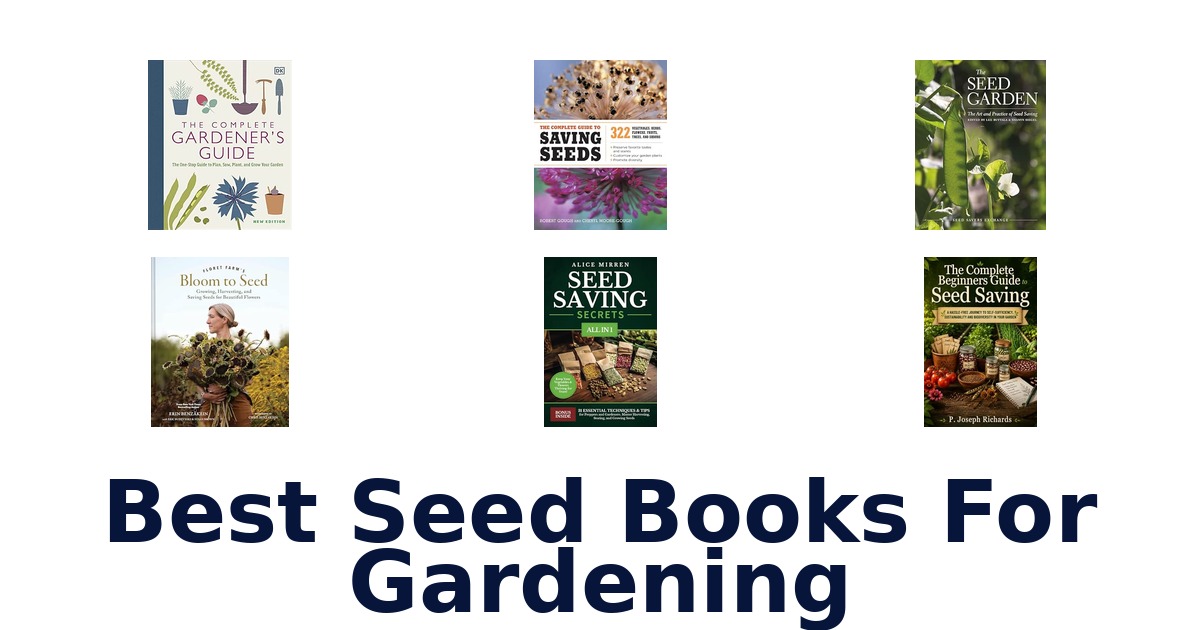
A strong seed book helps you choose the right technique for your goal, whether you want to start vegetables from seed, save seed for future seasons, or grow flowers. The Best Seed Books For Gardening range from focused references such as Seed to Seed to practical starting guides and broader garden-planning handbooks. Match the book to the work you actually want to do: saving seed calls for different guidance than getting seedlings established, and a flower-focused title will not cover the same ground as a vegetable reference.
This roundup compares ten books by their stated subject and scope, including one guide that names 322 kinds of plants. Use the rankings to find the most relevant starting point, then check the buying factors to narrow your choice.
Seed to Seed is the strongest overall choice for gardeners focused on growing vegetables and saving their seed: its title explicitly covers both seed saving and growing techniques for vegetable gardeners, and it is the second edition. Choose The Seed Garden for a dedicated seed-saving title, or The Complete Guide to Saving Seeds when broad plant coverage matters, since it names 322 vegetables, herbs, fruits, flowers, trees, and shrubs. For raising plants from seed rather than preserving it, Starting Seeds is the more direct fit.
Our Top Picks
 Best Overall
Its title directly pairs seed-saving and growing techniques for vegetable gardeners, making it a close match for gardeners seeking practical seed-focused guidance.
View on Amazon Seed-Saving Focus
The title centers on the art and practice of seed saving, so it directly suits gardeners whose main goal is preserving seed.
View on Amazon Broadest Plant Scope
Complete Guide to Saving Seeds
It covers 322 vegetables, herbs, fruits, flowers, trees, and shrubs, giving readers the widest explicitly stated range of plant types.
View on Amazon- Seed-Starting Guide Starting Seeds
- Flower Seed Guide Bloom to Seed
Compare seed books by gardening goal
| # | Product | Buy |
|---|---|---|
| 1 | 1. Seed to SeedBest Overall | View on Amazon |
| 2 | 2. The Seed GardenSeed-Saving Focus | View on Amazon |
| 3 | 3. Complete Guide to Saving SeedsBroadest Plant Scope | View on Amazon |
| 4 |  4. Starting SeedsSeed-Starting Guide | View on Amazon |
| 5 |  5. New Seed-Starters HandbookFor dedicated seed starters | View on Amazon |
| 6 | 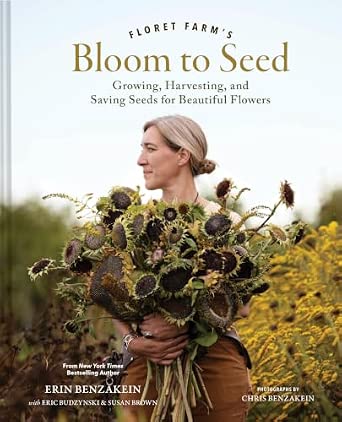 6. Bloom to SeedFlower Seed Guide | View on Amazon |
| 7 |  7. Complete Beginners Guide to Seed SavingFor beginner seed savers | View on Amazon |
| 8 |  8. Vegetable Gardener’s HandbookFor vegetable garden planners | View on Amazon |
| 9 |  9. Seed Saving SecretsFor seed-saving preparedness | View on Amazon |
| 10 |  10. Complete Gardener’s GuideFor whole-garden planning | View on Amazon |
Detailed Reviews: Best Seed Books For Gardening
#1 · Best Overall
1. Seed to Seed
Best for: For vegetable seed savers.
Why it ranks #1: Its title directly pairs seed-saving and growing techniques for vegetable gardeners, making it a close match for gardeners seeking practical seed-focused guidance.
Seed saving and growing techniques for vegetable gardeners are the central focus of Seed to Seed, making it a subject-specific choice for readers interested in both sides of the process. The second edition identifies its audience clearly: gardeners who want seed-related guidance centered on vegetable crops.
The title connects seed saving with growing techniques, giving vegetable gardeners a single subject-focused reference rather than a general garden-planning guide. Its stated audience can help readers decide whether the book matches their crop interests, while the second-edition designation identifies the version. Since the supplied information does not specify individual crops, methods, or storage instructions, buyers should treat its confirmed scope as vegetable seed saving and growing, not assume a particular technique is covered.
- Focuses on seed saving for vegetable gardeners
- Also covers growing techniques
- Specifically identifies vegetable gardening as its audience
- Presented as the second edition
- The supplied details do not identify specific crops or techniques covered.
Skip it if you mainly need flower seed-saving guidance; Floret Farm’s Bloom to Seed focuses on growing, harvesting, and saving flower seeds.
This title suits vegetable gardeners who want a book centered on seed saving alongside growing techniques. Its stated scope is vegetables, so readers seeking flower-specific seed harvesting or a broader garden-planning manual may prefer another focus.
Listed on Amazon as: Seed to Seed: Seed Saving and Growing Techniques for Vegetable Gardeners, 2nd Edition
View on Amazon#2 · Seed-Saving Focus
2. The Seed Garden
Best for: For seed-saving practitioners.
Why it ranks #2: The title centers on the art and practice of seed saving, so it directly suits gardeners whose main goal is preserving seed.
The Seed Garden centers on the art and practice of seed saving, giving readers a focused title for exploring that activity rather than general garden planning. Its editorial and contributor credits identify a collaborative book, while the title makes seed saving its clear subject.
Because the title frames seed saving as both an art and a practice, it speaks to readers interested in the subject beyond simply sowing seeds. The named editors and contributor establish a collaborative authorship, but the supplied facts do not list particular crops, techniques, or equipment. That makes the book’s confirmed fit strongest for readers seeking a dedicated seed-saving title, while buyers needing a specified crop-by-crop method should check that the book’s contents match their needs.
- Dedicated to seed saving
- Frames the topic as both art and practice
- Identifies two editors
- Includes a named contributor
- The supplied details do not specify crops or individual seed-saving methods.
Skip it if you need named vegetable crops and growing techniques; Seed to Seed explicitly focuses on vegetable gardeners and seed saving.
Choose The Seed Garden if your priority is a focused book about the practice of saving seeds and you value its collaborative editorial credits. Its supplied description does not establish crop-specific coverage, so match expectations accordingly.
Listed on Amazon as: The Seed Garden: The Art and Practice of Seed Saving
View on Amazon#3 · Broadest Plant Scope
3. Complete Guide to Saving Seeds
Best for: For broad seed-saving coverage.
Why it ranks #3: It covers 322 vegetables, herbs, fruits, flowers, trees, and shrubs, giving readers the widest explicitly stated range of plant types.
Coverage of 322 vegetables, herbs, fruits, flowers, trees, and shrubs gives The Complete Guide to Saving Seeds unusually broad stated scope. That range makes it relevant to gardeners whose seed-saving interests extend beyond vegetables, and the two authors are identified as Robert E. Gough and Cheryl Moore-Gough.
The named range of 322 plant types gives readers a concrete reason to consider this guide when their garden includes more than vegetables. Its coverage explicitly spans herbs, fruits, flowers, trees, and shrubs as well, helping a buyer assess whether the book’s scope matches a varied planting. The title centers on saving seeds, though supplied facts do not specify particular techniques or how individual plant entries are organized.
- Names 322 plant types in its scope
- Includes vegetables and herbs
- Also covers fruits and flowers
- Extends to trees and shrubs
- The supplied details do not describe specific seed-saving techniques.
Skip it if you only need flower-focused seed guidance; Floret Farm’s Bloom to Seed is specifically about growing, harvesting, and saving flower seeds.
Choose this guide if you want seed-saving coverage across many kinds of plants, including vegetables, flowers, and woody species. Its broad title scope is useful for mixed gardens, though specific methods are not established by the supplied details.
Listed on Amazon as: The Complete Guide to Saving Seeds: 322 Vegetables, Herbs, Fruits, Flowers, Trees, and Shrubs
View on Amazon#4 · Seed-Starting Guide
4. Starting Seeds
Best for: For starting seeds at home.
Why it ranks #4: It specifically addresses growing vegetables, herbs, and flowers from seed, fitting gardeners focused on raising plants rather than saving seed.
Starting seeds is the defining focus of Barbara W. Ellis’s guide, which covers growing healthy, productive vegetables, herbs, and flowers from seed. That crop range makes the book relevant to gardeners beginning plants from seed across edible and ornamental garden categories.
The title’s emphasis on starting seeds connects the process to the stated goal of growing healthy, productive plants. Its coverage of vegetables and herbs supports edible-garden interests, while flowers bring ornamental growing into the same book. Identified as a Storey BASICS title and available in paperback, it is a focused option for readers seeking seed-starting guidance; the supplied facts do not detail equipment, schedules, or specific methods.
- Focuses on starting seeds
- Covers vegetables and herbs
- Includes flowers as well as edible crops
- Identified as a Storey BASICS title
- Its stated focus is seed starting, not seed saving.
Skip it if you want instructions for preserving harvested seed; Seed to Seed focuses on seed saving as well as growing techniques.
Pick this book if you want to start vegetables, herbs, and flowers from seed and prioritize seed-starting guidance. Gardeners seeking instructions for harvesting and preserving seed should note that the stated focus here is starting seeds.
Listed on Amazon as: Starting Seeds: How to Grow Healthy, Productive Vegetables, Herbs, and Flowers from Seed. A Storey BASICS® Title
View on Amazon#5
5. New Seed-Starters Handbook
Best for: For dedicated seed starters.
Why it ranks #5: Its seed-starter title aligns with gardeners who want a dedicated starting reference, though the supplied details do not specify its crop range.
The New Seed-Starters Handbook makes seed starting its explicit subject, offering a focused title for gardeners looking to begin plants from seed. Its Rodale Organic Gardening series identification and paperback format help distinguish it as a dedicated seed-starting book within this roundup.
A handbook centered on seed starting keeps the subject narrower than a whole-garden guide, which may suit readers who want that stage to be their main focus. The Rodale Organic Gardening identification signals its series context, while the authors are listed as Nancy Bubel and Jean Nick. No crop list, equipment guidance, or particular sowing methods appear in the supplied facts, so buyers should not assume those specifics from the title alone.
- Explicitly focused on seed starting
- Identified with Rodale Organic Gardening
- Two authors are named
- Paperback format
- The supplied details do not specify crops or starting methods.
Skip it if you want a confirmed vegetable, herb, and flower crop range; Starting Seeds names all three categories in its title.
Consider this handbook if you want a title specifically about seed starting and value its Rodale Organic Gardening identification. The supplied facts do not spell out crop coverage or methods, so it is not a confirmed crop-by-crop selection.
Listed on Amazon as: The New Seed-Starters Handbook (Rodale Organic Gardening)
View on Amazon#6 · Flower Seed Guide
6. Bloom to Seed
Best for: For flower seed savers.
Why it ranks #6: It covers growing, harvesting, and saving seeds for flowers, making it a targeted option for gardeners chiefly interested in blooms.
Growing, harvesting, and saving seeds for beautiful flowers define Floret Farm’s Bloom to Seed, making it the flower-focused option in this group. Its title connects the growing stage to seed collection, giving flower gardeners a clear match when their interest is ornamental rather than vegetable seed saving.
The title links flower growing with harvesting and saving seed, so readers can follow the stated subject from cultivation to seed collection. That focus distinguishes it from vegetable-centered seed books and suits gardeners whose priority is flowers. Erin Benzakein is named as author and Chris Benzakein as photographer, with a hardcover format; supplied facts do not identify particular flower varieties or specific harvesting instructions.
- Focused on flowers
- Covers growing flowers
- Names harvesting and saving seeds
- Includes photography by Chris Benzakein
- Its stated focus is flowers rather than vegetables or herbs.
Skip it if you mainly save vegetable seeds; The Complete Guide to Saving Seeds covers vegetables, herbs, fruits, flowers, trees, and shrubs.
This is a fit for flower gardeners interested in growing plants through to harvesting and saving their seeds. Its flower-specific focus is a boundary for readers seeking vegetable or mixed-crop seed-saving coverage.
Listed on Amazon as: Floret Farm's Bloom to Seed: Growing, Harvesting, and Saving Seeds for Beautiful Flowers
View on Amazon#7
7. Complete Beginners Guide to Seed Saving
Best for: For beginner seed savers.
Why it ranks #7: It explicitly targets beginners and seed saving, with sustainability and biodiversity among its stated themes, but its supplied facts give no crop list.
A beginner-focused approach puts seed saving at the center of The Complete Beginners Guide to Seed Saving. Its title connects that starting point with self-sufficiency, sustainability, and biodiversity in the garden, making the intended reader and broader aims apparent before choosing a seed-saving book.
The book’s beginner framing can help newcomers identify it as an entry point, while its stated links to self-sufficiency and sustainability place seed saving within wider garden goals. Biodiversity is also part of its title, giving readers another stated reason to consider the subject. The supplied information does not identify crop lists or particular methods, so its confirmed appeal is the accessible seed-saving focus rather than a specified step-by-step technique.
- Explicitly aimed at beginners
- Focuses on seed saving
- Connects the topic with self-sufficiency
- Names sustainability and garden biodiversity
- The supplied details do not name specific crops or seed-saving methods.
Skip it if you want a title listing coverage across hundreds of plant types; The Complete Guide to Saving Seeds names 322 kinds.
This is a fit for new gardeners seeking a seed-saving book framed around sustainability, self-sufficiency, and biodiversity. If you need confirmed crop-by-crop coverage or named techniques, the supplied description does not establish those details.
Listed on Amazon as: The Complete Beginners Guide to Seed Saving: A Hassle-Free Journey to Self-Sufficiency, Sustainability and Biodiversity in Your Garden
View on Amazon#8
8. Vegetable Gardener’s Handbook
Best for: For vegetable garden planners.
Why it ranks #8: Its vegetable-garden advice covers planning, soil tests, and frost dates, useful context for growers, though it is less specifically about seed techniques.
Planning guidance connects garden location, soil checks, and seasonal timing before seeds go into the ground. The Old Farmer’s Almanac Vegetable Gardener’s Handbook helps readers think through where vegetables will grow, how to assess the soil, and when frost dates and nature’s signals matter to planting decisions.
The handbook’s advice on planning where to plant pairs with movable-container possibilities, helping gardeners consider sunlight when choosing a growing arrangement. Its at-home soil tests offer a practical way to assess ground conditions each season, while guidance on frost dates and natural signals informs when to plan. Together, these topics support a step-by-step approach to vegetable growing, from evaluating a site to timing planting, without narrowing the subject to seed saving alone.
- Step-by-step vegetable-growing advice
- Discusses movable containers and sunlight
- Covers seasonal at-home soil tests
- Addresses frost dates and nature’s planting signals
- Its stated focus is vegetable gardening rather than seed-saving techniques.
Skip it if you want detailed instructions specifically for saving seeds; Seed to Seed focuses on vegetable seed saving and growing techniques.
Choose this handbook if you want to plan a vegetable garden around site, soil, sunlight, and seasonal signals. Its broad growing focus suits gardeners preparing to sow, but seed-saving instruction is not its stated specialty.
Listed on Amazon as: The Old Farmer's Almanac Vegetable Gardener’s Handbook: Essential Step-by-Step Advice for Growing Vegetables and Achieving Success
View on Amazon#9
9. Seed Saving Secrets
Best for: For seed-saving preparedness.
Why it ranks #9: It addresses harvesting, storing, and growing seeds for vegetables and flowers, but its stated framing also emphasizes prepper interests.
Thirty-one essential techniques and tips give Seed Saving Secrets [All-in-1] a clearly stated, practical seed-saving scope for preppers and gardeners. Its title also names harvesting, storing, and growing seeds, connecting those stages with the goal of keeping vegetables and flowers thriving over time.
The stated sequence of harvesting, storing, and growing helps readers see the seed process as more than a single garden task. Its 31 techniques and tips are presented for both preppers and gardeners, while the title explicitly includes vegetables and flowers. The accompanying description connects seed saving with biodiversity and resilient gardens, making the subject relevant to long-term cultivation; supplied facts do not name individual techniques or crop-by-crop instructions.
- Lists 31 techniques and tips
- Names harvesting, storing, and growing
- Addresses both vegetables and flowers
- Aimed at preppers and gardeners
- The supplied details do not identify the 31 techniques individually.
Skip it if you need a confirmed list of techniques before choosing; The supplied information does not enumerate this book’s 31 tips.
This title fits gardeners and preppers interested in seed harvesting, storage, and growing across vegetables and flowers. Its stated technique count signals breadth, but readers who need a preview of specific methods will not find that detail in the supplied facts.
Listed on Amazon as: Seed Saving Secrets [All-in-1]: 31 Essential Techniques & Tips for Preppers and Gardeners. Master Harvesting, Storing, and Growing Seeds – Keep Your Vegetables & Flowers Thriving for Years!
View on Amazon#10
10. Complete Gardener’s Guide
Best for: For whole-garden planning.
Why it ranks #10: It covers planning, sowing, planting, and growing a garden, but its broad gardening scope makes it less seed-specific than the other choices.
Plan, sow, plant, and grow form the broad sequence promised by The Complete Gardener’s Guide, making it a whole-garden title rather than a seed-only manual. The hardcover book is by DK, and its stated scope suits readers looking for an overview across multiple garden stages.
The title connects planning with sowing, planting, and growing, giving readers a broad sequence to consider when organizing garden work. That scope may suit someone who wants seed sowing placed within the larger gardening process instead of treating it alone. The supplied facts do not identify specific crops, seed-starting techniques, or seed-saving coverage, so its confirmed strength is the all-in-one gardening remit rather than a specialized seed reference.
- Covers planning and sowing
- Includes planting and growing
- Presents itself as a one-stop garden guide
- Available in hardcover
- The supplied details do not confirm specialized seed-saving coverage.
Skip it if you specifically need vegetable seed-saving methods; Seed to Seed is focused on saving and growing vegetable seeds.
This guide fits readers who want garden planning, sowing, planting, and growing gathered under one broad title. Choose a more specialized book if your main need is confirmed, detailed seed-saving instruction.
Listed on Amazon as: The Complete Gardener's Guide: The One-Stop Guide to Plan, Sow, Plant, and Grow Your Garden
View on AmazonSeed starting and seed saving solve different problems
Seed starting and seed saving are related but distinct jobs, so choose a book by the stage where you need help. Starting Seeds focuses on growing vegetables, herbs, and flowers from seed; The New Seed-Starters Handbook is likewise explicitly about seed starting. Seed to Seed, The Seed Garden, and The Complete Guide to Saving Seeds instead foreground preserving and growing saved seed.
Confusing these goals can leave a gap: a starting guide may not answer a seed-preservation question, while a saving reference may not be the most direct fit for someone trying to raise seedlings. Some titles bridge part of that divide.
Seed to Seed names both saving and growing techniques for vegetable gardeners, while Bloom to Seed spans growing, harvesting, and saving seeds for flowers. Decide whether your immediate task is to establish plants, preserve seed, or both before choosing.
How to Choose a Seed Gardening Book
Choose the seed task you need help with
Look first for a title that matches whether you want to start plants or save seed. Starting Seeds specifically covers growing vegetables, herbs, and flowers from seed, while The New Seed-Starters Handbook is also centered on seed starting. Seed to Seed and The Seed Garden focus on seed saving; Bloom to Seed covers growing, harvesting, and saving flower seed.
The Complete Guide to Saving Seeds adds a broad range of plant types. If your immediate challenge is establishing seedlings, favour the starting titles; for preserving seed, choose one of the saving references.
Gardeners seeking both vegetable growing and seed saving have a particularly direct match in Seed to Seed.
Match the crop range to your garden
Check whether a book names the plants you grow instead of assuming every seed guide covers every crop. The Complete Guide to Saving Seeds explicitly covers 322 vegetables, herbs, fruits, flowers, trees, and shrubs. Starting Seeds names vegetables, herbs, and flowers, while Bloom to Seed is specifically about flowers.
Seed to Seed identifies vegetable gardeners in its title. These stated scopes make the choice clearer: a mixed garden with many plant types favours the broad guide, while flower growers may prefer Bloom to Seed and vegetable seed savers may prefer Seed to Seed.
For a general vegetable garden, The Old Farmer’s Almanac Vegetable Gardener’s Handbook adds planning and soil guidance, but its supplied details do not specify a seed-saving scope.
Consider how much garden context you want
Decide whether you want a focused seed reference or guidance that also addresses the wider garden. The Seed Garden and the seed-starter titles are directly focused on seed-related tasks, while The Old Farmer’s Almanac Vegetable Gardener’s Handbook includes planning where to plant, at-home soil tests, and awareness of frost dates. The Complete Gardener’s Guide takes a broader approach to planning, sowing, planting, and growing.
That difference matters: gardeners who already know their garden setup may prefer a narrow seed guide, while those still planning beds or containers may value the broader context. The handbook’s listed advice is especially relevant to vegetable growers preparing planting locations and checking soil, while the general guide suits readers seeking more than seed-specific coverage.
Which seed gardening book should you choose?
Choose Seed to Seed if you want one close match for vegetable growing and seed saving: its stated subject includes both. For the widest named crop range, select Complete Guide to Saving Seeds, which covers 322 vegetables, herbs, fruits, flowers, trees, and shrubs. If your priority is getting plants started, Starting Seeds covers vegetables, herbs, and flowers; choose New Seed-Starters Handbook for another seed-starting-focused title.
Flower gardeners interested in growing, harvesting, and saving seed can turn to Bloom to Seed. Beginners focused on seed preservation can consider Complete Beginners Guide to Seed Saving.
If you also need help planning a vegetable garden, Vegetable Gardener’s Handbook adds soil tests, planting-location advice, and frost-date awareness.
Frequently Asked Questions
What is the difference between starting seeds and saving seeds?
Starting seeds means sowing them to raise plants, while saving seeds means collecting and preserving seed for future planting. Starting Seeds focuses on growing vegetables, herbs, and flowers from seed. Seed to Seed and The Seed Garden focus on seed saving, with Seed to Seed also covering vegetable-growing techniques.
Can one seed-saving book cover both vegetables and flowers?
Yes. The Complete Guide to Saving Seeds names vegetables and flowers among its 322 covered plants, along with herbs, fruits, trees, and shrubs. For a narrower focus, Seed to Seed centers on vegetable gardeners, while Bloom to Seed is specifically about growing, harvesting, and saving flower seeds.
What should a beginner learn before planting seeds outdoors?
Learn when and where to plant, and check local frost-date guidance before putting plants outdoors. The Vegetable Gardener’s Handbook specifically includes planting-location advice and frost-date awareness. For learning how to raise plants from seed, Starting Seeds covers vegetables, herbs, and flowers.
Which book names the widest range of plants for seed saving?
The Complete Guide to Saving Seeds names 322 vegetables, herbs, fruits, flowers, trees, and shrubs. That makes it the clearest match when you want broad plant coverage rather than a book centered on vegetables or flowers. Check whether the groups named in its title match the plants you intend to grow.
Which book is a good fit for saving flower seeds?
Floret Farm’s Bloom to Seed is the direct fit for flower gardeners: its title covers growing, harvesting, and saving seeds for flowers. If you want broader coverage beyond flowers, The Complete Guide to Saving Seeds names flowers alongside vegetables, herbs, fruits, trees, and shrubs.
Final Words
Choose Seed to Seed if your main goal is growing vegetables while learning to save their seeds. For dedicated seed-saving guidance, consider The Seed Garden; choose The Complete Guide to Saving Seeds when its named range of 322 plant types suits your garden. If you are starting plants rather than preserving seed, look to Starting Seeds or the New Seed-Starters Handbook.
Flower gardeners can choose Bloom to Seed, while garden planners may prefer the Vegetable Gardener’s Handbook.