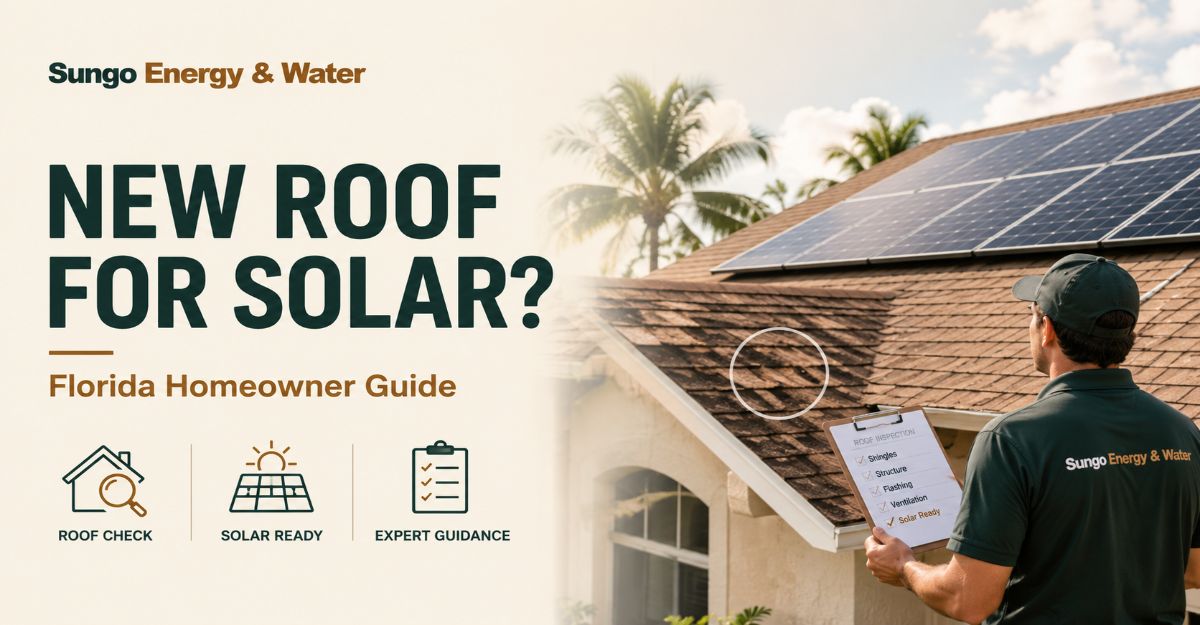
You likely need a new roof before installing solar in Florida if your current roof is over 15 years old, primarily due to state insurance regulations, not just structural integrity.
Installing 25-year solar panels on a 15-year-old shingle roof exposes you to policy cancellation under Florida Statute 627.7011 or an inevitable $3,500 to $8,500 “detach and reset” bill when the roof fails.
Key Facts at a Glance
- The 15-Year Rule: Florida insurers cannot drop your coverage based solely on roof age if the roof is under 15 years old; over 15, they demand an inspection or replacement.
- The D&R Trap: Removing and reinstalling solar panels to replace an older roof later costs $200 to $500 per panel, completely eroding your solar savings.
- Best Value Pairing: A new asphalt shingle roof paired with standard rack-mounted solar offers the lowest upfront cost to reset your insurance clock.
- The Gold Standard: Standing seam metal roofs with clamp-mounted solar eliminate roof penetrations and outlast the solar panels entirely.
- Tax Credit Reality: The 30% Federal ITC applies to the solar system, not the underlying traditional roof materials.
The 15-Year Insurance Rule: Why It Defines Your Decision
In Florida, your roof’s lifespan is dictated by your insurance company, not the manufacturer’s warranty. Under Florida Statute 627.7011, homeowners have specific protections and vulnerabilities based on the 15-year mark.
If your roof is under 15 years old, an insurer cannot refuse to issue or renew a policy solely based on age. However, once your roof hits 15 years, insurance carriers will demand a “4-Point Inspection.” If the inspector cannot certify that the roof has at least five years of remaining useful life, the insurer can force a replacement as a condition of continued coverage.
Adding solar to a 14-year-old roof creates a financial liability. You are bolting a 25-year asset onto a structure that your insurer will likely force you to replace in one to five years. Furthermore, as roofs age past 15 years, policies often shift from Replacement Cost Value (RCV) to Actual Cash Value (ACV), meaning if a hurricane damages your older roof, the insurance payout will be heavily depreciated, leaving you to cover the bulk of the replacement and the solar removal costs.
The Hidden Threat: Detach and Reset (D&R) Costs
If you install solar on an aging roof, you will eventually have to replace that roof while the solar panels are still perfectly functional. This triggers a specific, expensive labor event known as “Detach and Reset” (D&R).
A standard D&R involves safely disconnecting the high-voltage DC system, removing the panels and racking, storing them, and then reinstalling and re-commissioning the system after the roofers finish. You must pay a certified solar crew for this work; roofers are not licensed for high-voltage DC electrical work, and letting them move the panels will void your solar warranties.
The costs are substantial. Contractors typically charge between $200 and $500 per panel for D&R services in Florida. For an average 20-panel residential system, you can expect a bill between $3,500 and $6,000. A large 40-panel system can cost over $11,000 just to move the equipment. Combining the roof and solar projects upfront eliminates this guaranteed future expense entirely.
Never attempt a DIY detach and reset to save money; solar panels carry 300 to 600 volts of DC current even when disconnected from the grid, creating a lethal electrocution hazard, and DIY removal violates the National Electrical Code.

Comparing Florida Roof Types for Solar Integration
When replacing your roof for solar, the material you choose dictates the installation method, cost, and long-term viability of the system.
| Roof Material | Estimated Lifespan | Solar Integration Method | Upfront Cost | Leak Risk |
| Metal (Standing Seam) | 40–70 Years | S-5! Clamps (No Penetration) | High ($15k–$40k) | Extremely Low |
| Asphalt Shingle | 15–20 Years (FL Sun) | Drilled Lag Bolts with Flashing | Low ($6k–$12k) | Moderate |
| Concrete/Clay Tile | 30–50 Years | “Comp-Out” / Picture Framing | High ($20k–$50k) | High (if walked on) |
| Solar Shingles | 25+ Years | Integrated (Replaces Roof) | Very High ($30k+) | Low |
1. Metal Roof + Solar (The Gold Standard)
A standing seam metal roof is the optimal choice for solar in Florida because its 40-to-70-year lifespan easily outlasts the 25-year lifespan of solar panels.
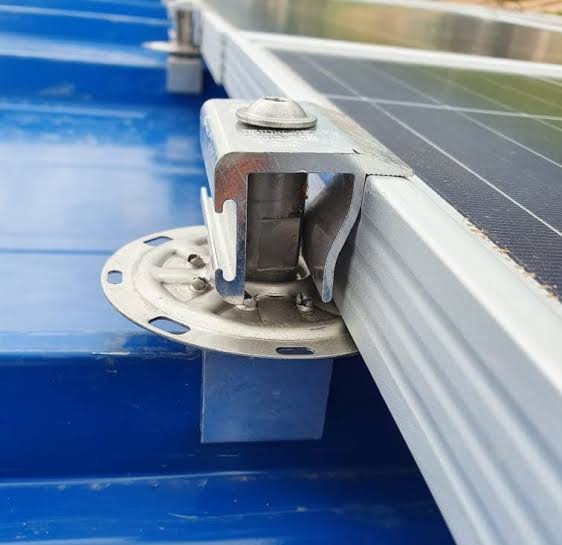
Installers use specialized clamps, such as S-5! hardware, which grip the raised seams of the metal roof. This means the entire solar array can be mounted without drilling a single hole through your roof deck, virtually eliminating the risk of water intrusion. While the upfront cost of a metal roof is high, it provides the lowest lifetime cost of ownership and superior hurricane wind resistance.
2. Asphalt Shingle + Solar (The Standard)
Asphalt shingles are the most common and cost-effective choice for resetting the insurance clock before installing solar.
Because standard architectural shingles last about 15 to 20 years under the harsh Florida sun, they perfectly align with the 15-year insurance rule. Installers must drill lag bolts through the shingles and into the roof trusses to secure the racking, sealing the penetrations with specialized flashing. If you choose this route, upgrade to Class 4 impact-resistant shingles to maximize wind protection and longevity. You will likely face one D&R event at the end of the roof’s life before the solar panels degrade completely.
3. Tile Roof + Solar (The Complicated One)
Florida clay and concrete tiles are inherently brittle, making traditional solar installation risky; walking on the roof to install the panels will inevitably crack tiles, leading to leaks.
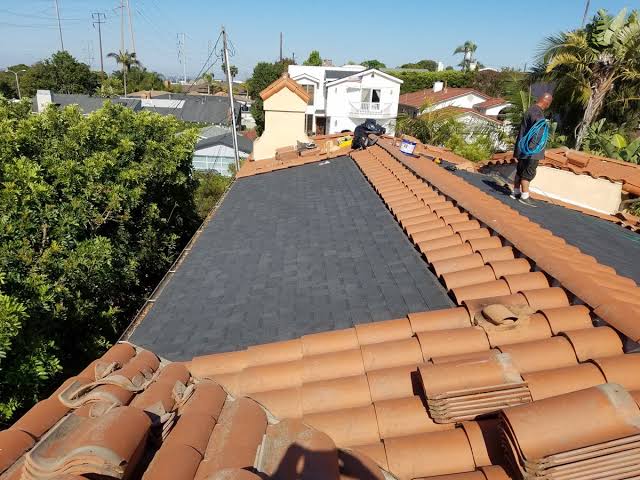
To mitigate this, reputable installers perform a “comp-out” or “picture framing” installation. The roofing crew removes the tiles in the exact footprint of the solar array, installs asphalt shingles (composition) in that square, mounts the solar over the shingles, and then borders the array with the original tiles. This ensures a watertight seal and provides a stable base, but it adds significant labor cost and requires tight coordination between the roofer and solar installer.
Which Should You Choose? A Decision Matrix
Solar-Ready Roof Evaluator
Your path forward depends entirely on the current age of your roof.
If your roof is 0–5 Years Old
Verdict: Proceed with Solar.
Your roof's lifespan aligns well with the solar panels. You are safe from the 15-year insurance rule for at least a decade, and you will capture the majority of the solar savings before a D&R event is necessary.
If your roof is 5–10 Years Old
Verdict: Inspect First.
Hire an independent, authorized inspector (not a solar salesperson) to assess the roof's true condition. If the roof is in excellent shape, you can proceed, but understand you are entering a window where a future $4,000+ D&R bill is highly probable.
If your roof is 10–15 Years Old
Verdict: Replace the Roof First.
You are in the insurance danger zone. Installing solar now guarantees that within 1 to 5 years, your insurer will demand a roof replacement, triggering a massive D&R bill. Bundling the roof and solar now is the only financially sound option.
If your roof is 15+ Years Old
Verdict: Mandatory Replacement.
Most Florida insurers will not cover this roof much longer, or they have already switched your policy to ACV. Installing a 25-year solar asset on a liability is a critical financial error. Replace the roof immediately.
Hurricane Building Codes: The HVHZ Requirement
When replacing a roof for solar in Florida, you must navigate strict building codes designed to withstand catastrophic winds, particularly if you live in Miami-Dade or Broward counties.
Following the devastation of Hurricane Andrew in 1992, Florida unified its building codes. The state established the High-Velocity Hurricane Zone (HVHZ) for Miami-Dade and Broward counties, requiring structures to withstand wind speeds of 175 mph or higher. All roofing materials, solar panels, and mounting hardware installed in the HVHZ must possess a specific Florida Product Approval demonstrating they have passed intense wind and missile-impact testing.
Even outside the HVHZ, much of Florida falls into Wind-Borne Debris Regions (coastal areas with design wind speeds of 130+ mph). Ensure your solar installer provides engineering sheets demonstrating compliance with ASCE 7-22 wind load requirements for your specific address.
Frequently Asked Questions
Does the 30% solar tax credit cover the cost of my new roof?
No. The 30% Federal Investment Tax Credit (ITC) applies only to the solar equipment and the labor to install it. It cannot be applied to the cost of traditional roofing materials (like shingles or metal) beneath the panels. The only exception is solar shingles (like Tesla Solar Roof), where the roof itself generates power.
Will my homeowner's insurance premium go up if I add solar?
Typically, yes, but only slightly. You are increasing the replacement cost value of your home by adding a $20,000+ asset to the roof. Your dwelling coverage limit needs to increase to protect that asset, which usually results in a minor premium increase.
Can my HOA stop me from installing solar in Florida?
No. Florida Statute 163.04 (the Florida Solar Rights Act) expressly forbids any binding agreement, including HOA covenants, from prohibiting a property owner from installing solar panels. While an HOA can request aesthetic modifications (like mounting panels on the back of the house), they cannot do so if it significantly impairs the system's efficiency or increases the cost.
How close to the coast before salt spray becomes an issue for solar panels?
If you live within one to three miles of the Florida coast, standard aluminum racking and panel frames can suffer severe galvanic corrosion from airborne salt. You must demand panels that are IEC 61701 certified (Salt Mist Corrosion Testing) and specify anodized aluminum or stainless steel mounting hardware to prevent the system from degrading prematurely.