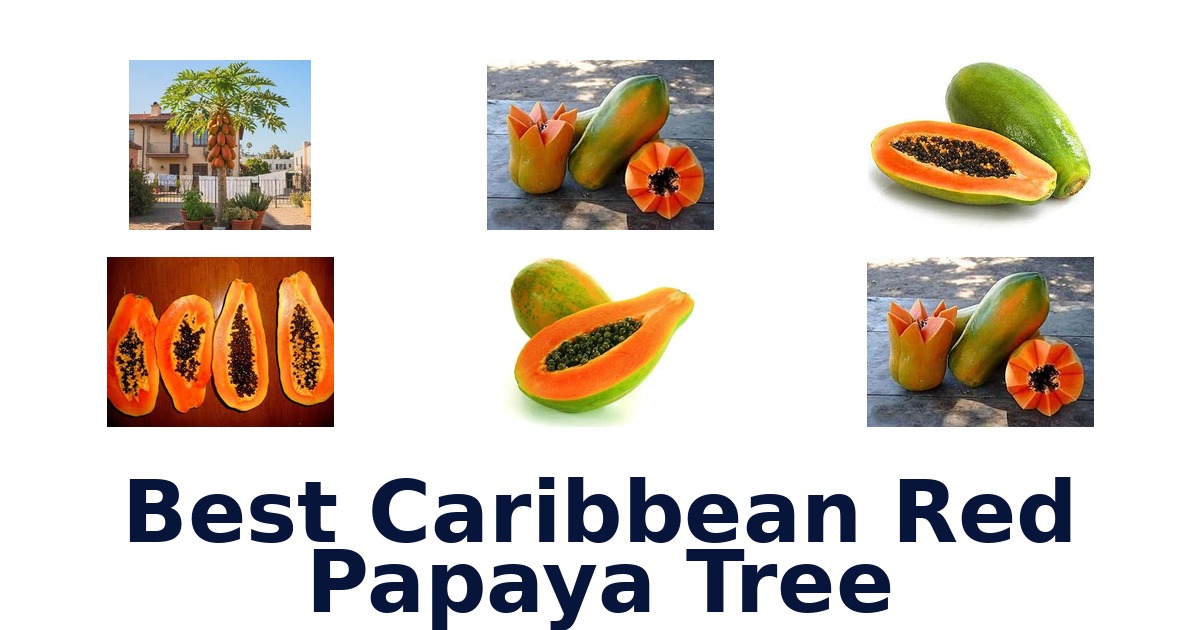
A strong choice for a Caribbean Red papaya tree gives you either seeds identified as Maradol or a live red papaya plant suited to your growing setup. This roundup includes both routes: seed packs ranging from 10 to 100 seeds, and live plants from 2-inch plugs to established trees 1–2 feet tall. The closest matches to the exact Caribbean Red wording are seeds, while live options suit buyers who want to start with a growing plant.
Some live listings describe Red Lady or dwarf red papaya rather than specifically Caribbean Red, so check the variety name before choosing. Compare the product form, stated size, and growing notes against your climate and plans; fruiting depends on suitable growing conditions, and the listings do not provide a guarantee of results.
For buyers seeking a live starting plant, Japanese Maples and Evergreens Red Lady 1–2 Ft Live Tree leads: it is described as an established, nursery-grown plant, and its listing calls out container growing and sweet papayas. It is a Red Lady dwarf papaya, not explicitly labeled Caribbean Red, so buyers who prioritize that exact variety wording should consider the Maradol Caribbean Red seed listings instead. Seeds require growing from the start, while the live listings offer different starting sizes and formats.
Our Top Picks
 Best Overall
This established live plant ships 1–2 feet tall, and its listing specifically describes a compact Red Lady papaya for gardens, patios, and containers.
View on Amazon Fast-Fruiting Claim
Japanese Maples Red Lady Starter
This rooted Red Lady plant comes in a 3-inch pot; its listing says it may fruit within 8 months under good growing conditions.
View on Amazon Potted Plant
The well-rooted plant arrives in a half-gallon pot at 6–10 inches tall, with a stated mature height of about 8–12 feet.
View on Amazon- Compact Starter Generic Dwarf Red Papaya Plug
- Largest Seed Pack Maradol Papaya Seeds 100
Compare these papaya seeds and live plants
| # | Product | Buy |
|---|---|---|
| 1 | 1. Japanese Maples Red Lady TreeBest Overall | View on Amazon |
| 2 | 2. Japanese Maples Red Lady StarterFast-Fruiting Claim | View on Amazon |
| 3 | 3. UIOTER Dwarf Red PapayaPotted Plant | View on Amazon |
| 4 |  4. Generic Dwarf Red Papaya PlugCompact Starter | View on Amazon |
| 5 |  5. Generic Red Papaya PlantSmall-Plug Patio Growers | View on Amazon |
| 6 |  6. Maradol Papaya Seeds 100Largest Seed Pack | View on Amazon |
| 7 |  7. rollmisty Maradol SeedsHeirloom Seed Gardeners | View on Amazon |
| 8 |  8. SVI Caribbean Red SeedsFast-Claim Seed Shoppers | View on Amazon |
| 9 |  9. honjeelava Maradol SeedsTwenty-Five Seed Buyers | View on Amazon |
| 10 |  10. SVI Maradol Seeds 25SVI Caribbean Red Seed Packet | View on Amazon |
Detailed Reviews: Best Caribbean Red Papaya Tree
#1 · Best Overall
1. Japanese Maples Red Lady Tree
Best for: Established Patio Papaya Starter.
Why it ranks #1: This established live plant ships 1–2 feet tall, and its listing specifically describes a compact Red Lady papaya for gardens, patios, and containers.
This nursery-grown Red Lady Dwarf Papaya arrives as an established live tree measuring 1–2 feet, giving growers a larger starting plant than a small plug. Its compact habit and container-friendly listing make it relevant for patios, greenhouses, and warm-climate gardens seeking sweet orange-fleshed fruit.
The 1–2-foot plant is described as well-established, which gives buyers a more developed starting point than a seed or tiny plug, though the listing does not promise a specific harvest date. Its fast-growing dwarf habit and container-friendly use support patio or greenhouse placement where warmth is available. The stated sweet fruit with rich orange flesh pairs the ornamental foliage appeal with a food-growing purpose, while warm-climate suitability remains an important growing boundary.
- Established live Red Lady Dwarf Papaya, 1–2 feet tall
- Compact habit is listed as container friendly
- Fruit is described as sweet with rich orange flesh
- Suitable settings include patios and greenhouses
- The listing identifies warm climates as the suitable growing environment.
Skip it if you need a seed packet for starting several plants; rollmisty Maradol Caribbean Red Papaya offers 15 seeds instead.
Consider this established starter if you want a larger Red Lady plant for a warm patio, greenhouse, or garden and value its compact form. Its tropical growing needs make climate and placement central to the choice.
Full product details
| Brand | Japanese Maples and Evergreens |
|---|---|
| Color | Green |
| Item Weight | 11.2 ounces |
| Manufacturer | Japanese Maples and evergreens |
| Material Feature | Live Red Lady Dwarf Papaya (Carica papaya) plant, nursery grown, non-GMO, established live tree 1–2 feet tall See more |
| Material Features | Live Red Lady Dwarf Papaya (Carica papaya) plant, nursery grown, non-GMO, established live tree 1–2 feet tall |
| Special Features | fast growing tropical fruit tree, sweet edible papayas, compact growth habit, container friendly, lush tropical foliage, productive home orchard plant, exotic edible landscape tree |
| Care Instructions | Plant in full sun in rich, well-draining soil. Water consistently to keep the soil evenly moist but not waterlogged. Fertilize regularly during the growing season for vigorous growth and fruit production. Protect from frost and temperatures below freezing. |
| Special Feature | fast growing tropical fruit tree, sweet edible papayas, compact growth habit, container friendly, lush tropical foliage, productive home orchard plant, exotic edible landscape tree See more |
Listed on Amazon as: Red Lady Dwarf Papaya Live Tree – Carica Papaya – Tropical Fruit Plant – 1–2 Ft Tall – Sweet Papaya Tree – Exotic Garden & Container Plant
View on Amazon#2 · Fast-Fruiting Claim
2. Japanese Maples Red Lady Starter
Best for: Red Lady Sweet-Fruit Growers.
Why it ranks #2: This rooted Red Lady plant comes in a 3-inch pot; its listing says it may fruit within 8 months under good growing conditions.
This Red Lady Dwarf Papaya listing claims fruiting within eight months under good growing conditions, a concrete timeline for growers planning a tropical starter. It arrives rooted in a 3-inch pot and is described as a semi-dwarf plant with sweet, red-orange-fleshed fruit and a mature height of about 8–12 feet.
The rooted 3-inch pot supplies a live starter, while the stated 8–12-foot mature size clarifies that semi-dwarf does not mean permanently small. Full sunlight, well-drained soil, and regular watering are listed care needs, helping buyers plan placement and routine maintenance. The listing says fruiting can occur within eight months under good conditions and identifies USDA zones 9b–11, so the timeline depends on growing circumstances and the warm-climate range matters.
- Rooted live plant supplied in a 3-inch pot
- Semi-dwarf variety reaches about 8–12 feet
- Lists full sunlight and well-drained soil needs
- Fruiting within eight months is stated under good conditions
- The eight-month fruiting timeline is conditional on good growing conditions.
Skip it if you want a larger established starter; Japanese Maples and Evergreens Red Lady Dwarf Papaya arrives as a 1–2-foot live tree.
Choose this rooted Red Lady starter if you can provide full sun, drainage, regular watering, and a suitable warm climate. The eight-month fruiting statement is conditional, and its eventual 8–12-foot size needs planning.
Full product details
| Brand | Japanese Maples and Evergreens |
|---|---|
| Color | Green |
| Manufacturer | Japanese Maples and evergreens |
| Material Feature | GMO Free, Organic |
| Material Features | GMO Free, Organic |
| Care Instructions | well-drained |
Listed on Amazon as: Red Lady Dwarf Papaya (Carica) Live Tree Plant – Dwarf Tropical Fruit Starter, Real Exotic Garden Plant, Indoor/Outdoor Planting, Rooted in 3-Inch Pot, Ideal for Papaya Lovers
View on Amazon#3 · Potted Plant
3. UIOTER Dwarf Red Papaya
Best for: Potted Dwarf Tree Buyers.
Why it ranks #3: The well-rooted plant arrives in a half-gallon pot at 6–10 inches tall, with a stated mature height of about 8–12 feet.
A half-gallon pot and 6–10-inch listing height make this Dwarf Red Sweet Papaya a potted live-plant option rather than loose seed or a plug. It is described as fast-growing, drought tolerant, and capable of abundant fruit production with proper care, with a stated shipping exclusion for California.
The half-gallon pot and well-rooted description give buyers a planted starter that can be handled as a potted tree, while its listed 6–10-inch height helps set expectations for its initial scale. The dwarf plant typically matures to about 8–12 feet, so it still calls for room as it grows. Sweet fruit and high yield potential are stated with proper care; the listing also identifies drought tolerance and low maintenance, but excludes shipment to California.
- Live Dwarf Red Papaya in a half-gallon pot
- Listed as well-rooted and ready to grow
- Typical mature height is about 8–12 feet
- Sweet fruit and abundant production potential with proper care
- The seller does not ship this plant to California.
Skip it if you are in California; the Japanese Maples and Evergreens Red Lady Dwarf Papaya listing gives no California shipping exclusion.
A practical pick for buyers seeking a rooted, potted dwarf papaya and able to accommodate its stated mature height. California shoppers should rule it out, and all growers need to provide proper care for fruit production.
Full product details
| Brand | UIOTER |
|---|---|
| Color | Red |
| Manufacturer | UIOTER |
| Special Features | Drought Tolerant, Low Maintenance |
| Special Feature | Drought Tolerant, Low Maintenance |
Listed on Amazon as: Dwarf Red Sweet Papaya Live Plant in Half-Gal Pot, Tropical Fruit Trees
View on Amazon#4 · Compact Starter
4. Generic Dwarf Red Papaya Plug
Best for: Compact Live-Plant Growers.
Why it ranks #4: This live dwarf red papaya is supplied as a 2-inch plug, and its listing notes container suitability and warm-climate growing needs.
A dwarf habit and 2-inch plug make this live Red Papaya a compact starting point for growers with a home garden or selected container setup. The listing describes sweet fruit with red-orange flesh under suitable conditions, while its warm-climate guidance helps set expectations for placement and care.
This arrives as one live plant in a 2-inch plug without a pot, so buyers should plan to provide a growing container or planting site. Its dwarf type is presented as suitable for home gardens and selected container growing, while the stated preference for warm sun, well-draining soil, and regular watering guides placement and routine care. The listing gives USDA zones 9–11 generally and notes that fruiting depends on maturity and conditions.
- One live Dwarf Red Papaya plant supplied
- Compact growth habit suits selected container setups
- Prefers a warm, sunny location
- Lists well-draining soil and regular watering needs
- Supplied as a 2-inch plug without a pot.
Skip it if you want a larger potted starter; Japanese Maples and Evergreens Red Lady Dwarf Papaya is listed as a 1–2-foot established live tree.
A suitable choice for warm-climate growers who want a compact live papaya starter and can provide sun, drainage, and regular watering. Account for the plug format and the need to grow it to maturity before fruiting.
Full product details
| Brand | Generic |
|---|---|
| Color | Red |
| Manufacturer | Generic |
Listed on Amazon as: Dwarf Red Papaya Live Plant, 2" Plug, Compact Tropical Fruit Tree
View on Amazon#5
5. Generic Red Papaya Plant
Best for: Small-Plug Patio Growers.
Why it ranks #5: This live plant ships 4–7 inches tall in a 2-inch plug and is described for containers, patios, greenhouses, and home gardens.
A 4–7-inch height in a 2-inch plug makes this young Red Papaya a compact live starter for buyers with limited initial planting space. The listing names containers, patios, home gardens, and greenhouses as growing options, with fruit possible after maturity under suitable conditions.
The young plant’s 4–7-inch size and 2-inch plug format make it easier to begin in a compact space, although buyers will need to supply a suitable planting setup. Its listed flexible locations include containers, patios, home gardens, and greenhouses, which gives growers options for placement. Large, deeply cut leaves add recognizable tropical foliage, while fruit development is conditional on maturity and suitable conditions rather than an immediate result.
- Live Red Papaya plant listed at 4–7 inches tall
- Supplied in a 2-inch plug
- Growing options include containers and patios
- Large, deeply cut green foliage is described
- The young plant is supplied in a 2-inch plug, not a larger established pot.
Skip it if you prefer a larger established tree; Japanese Maples and Evergreens Red Lady Dwarf Papaya is listed at 1–2 feet tall.
This is a fit for growers wanting a very young live papaya for a container, patio, greenhouse, or garden. Plan for transplanting from its small plug and allow time for maturity before expecting fruit.
Full product details
| Brand | Generic |
|---|---|
| Color | Green |
| Manufacturer | Generic |
| Special Features | Compact |
| Special Feature | Compact |
Listed on Amazon as: Red Papaya Live Plant, 4-7 Inches Tall
View on Amazon#6 · Largest Seed Pack
6. Maradol Papaya Seeds 100
Best for: Bulk Maradol Seed Starter.
Why it ranks #6: The 100-seed pack names MARADOL and Caribbean Red papaya directly, making it a close variety match for buyers willing to start from seed.
A 100-seed quantity is the defining feature of this MARADOL Caribbean Red papaya listing, giving growers many seeds to work with rather than a single live starter. The supplied description identifies a tropical fruit tree and gives an approximate mature height, useful for considering garden space before planting.
The listing names MARADOL papaya and says the tree grows about 10 to 15 feet tall, connecting variety choice with a meaningful space requirement. Its 100 fresh seeds make this a seed-starting option, not an already growing tree; buyers will need to raise the plants from seed. The description calls the fruit delicious but does not provide a growing schedule or detailed care instructions, so this suits gardeners comfortable managing establishment themselves.
- Includes 100 fresh MARADOL papaya seeds
- Identifies the variety as Caribbean Red papaya
- Describes the plant as a tropical fruit tree
- Lists an approximate mature height of 10–15 feet
- Seeds require growing into plants; no live tree is supplied.
Skip it if you want a growing plant now; the Japanese Maples and Evergreens Red Lady Dwarf Papaya arrives as an established 1–2-foot live tree.
Choose this seed quantity if you want to start multiple MARADOL papayas and can plan around a tree reaching roughly 10–15 feet. It is not the direct route for buyers seeking a rooted, established plant.
Full product details
| Brand | Unknown |
|---|---|
| Color | Red |
Listed on Amazon as: 100 Fresh Seeds MARADOL Papaya Caribbean Red Papaya Tropical Fruit Plant Tree
View on Amazon#7
7. rollmisty Maradol Seeds
Best for: Heirloom Seed Gardeners.
Why it ranks #7: This 15-seed pack explicitly names Maradol Caribbean Red and identifies the seeds as heirloom and GMO-free.
Heirloom and GMO-free features distinguish rollmisty’s 15-seed Maradol Caribbean Red papaya packet, offering gardeners a named seed choice with those stated material attributes. Its description points to orange fruit, while the modest quantity makes it a smaller seed-starting option than bulk listings.
The 15 seeds are identified as Maradol Caribbean Red papaya, so buyers can select a named tropical fruit variety rather than an unspecified plant. The listed heirloom and GMO-free attributes may matter to gardeners prioritizing those seed characteristics. The description says the fruit is orange and high in nutrition, but gives no mature plant dimensions or care schedule. This is a seed packet, so it calls for growing time and suitable conditions before fruit is possible.
- Contains 15 papaya seeds
- Names the Maradol Caribbean Red variety
- Lists heirloom and GMO-free features
- Describes orange fruit
- The listing supplies seeds rather than an established live plant.
Skip it if you need a rooted papaya immediately; Japanese Maples and Evergreens Red Lady Dwarf Papaya is listed as an established 1–2-foot live tree.
This packet suits gardeners who specifically want Maradol Caribbean Red seeds with stated heirloom and GMO-free features. Choose it only if you are prepared for seed-starting rather than buying a young plant ready to grow.
Full product details
| Brand | rollmisty |
|---|---|
| Color | Red |
| Material Feature | GMO Free, Heirloom |
| Material Features | GMO Free, Heirloom |
Listed on Amazon as: Fruit Seeds – 15 Seeds of Maradol Caribbean Red Papaya Tropical Fruit Tree Heirloom Non GMO Garden Seeds
View on Amazon#8
8. SVI Caribbean Red Seeds
Best for: Fast-Claim Seed Shoppers.
Why it ranks #8: The listing specifically names Caribbean Red papaya and offers 10 seeds, but it provides no further growing or seed-origin details.
The title’s claim of fruit in only nine months from seed is the defining distinction of this 10-seed Caribbean Red Papaya listing, giving seed buyers a stated timeline to weigh. The product is identified as tree seeds, so it is for growers willing to start plants rather than purchase a live tree.
This SVI listing specifies 10 Caribbean Red papaya tree seeds and makes a nine-month-from-seed fruiting claim in its title. That timeline is the key planning detail, but the supplied information does not provide care directions, mature dimensions, or conditions attached to the claim. Buyers should therefore treat it as a seed-starting selection and consider that it requires growing from seed, rather than expecting a rooted plant on arrival.
- Contains 10 seeds
- Names Caribbean Red papaya
- Title states fruit in nine months from seed
- Identified as papaya tree seeds
- The supplied product information gives no care guidance beyond the title’s timeline claim.
Skip it if you want a live starter with growing guidance; the Generic Dwarf Red Papaya 2-inch plug listing specifies sun, soil, and watering needs.
This listing may suit seed growers drawn to the title’s nine-month fruiting claim and seeking a 10-seed Caribbean Red option. It offers little cultivation detail, so buyers wanting care specifications should choose accordingly.
Full product details
| Brand | SVI |
|---|---|
| Color | Red |
| Part Number | 123456 |
Listed on Amazon as: Caribbean Red Papaya Tree Seeds! Grows fruit in only 9 MONTHS from seed!10 seeds
View on Amazon#9
9. honjeelava Maradol Seeds
Best for: Twenty-Five Seed Buyers.
Why it ranks #9: This 25-seed listing names Maradol Caribbean red papaya, although the title also uses Caribbean Sunrise and provides little additional detail.
A 25-seed quantity distinguishes this honjeelava listing of Meradol Maradol Caribbean red and Caribbean Sunrise papaya seeds, giving seed starters a mid-sized packet. The title also describes the plant as producing big fruit, but the supplied details offer no additional care or growing specifications.
The listing names Meradol Maradol Caribbean red and Caribbean Sunrise Papaya and supplies 25 seeds, making quantity and variety wording its main selection details. Its title describes big fruit, which may appeal to growers choosing a papaya by expected fruit size, but no dimensions or cultivation conditions are supplied to clarify that claim. Because this is a seed listing rather than a live plant, buyers must grow it from seed and manage establishment themselves.
- Contains 25 seeds
- Names Meradol Maradol Caribbean red papaya
- Also names Caribbean Sunrise Papaya
- Title describes the plant as producing big fruit
- The listing provides no care instructions or mature plant specifications.
Skip it if you need a live plant and care details; Generic Dwarf Red Papaya 2-inch plug includes sun, soil, and watering guidance.
A reasonable match for seed buyers seeking the named Caribbean red or Sunrise wording and a 25-seed quantity. Choose another listing if live-plant delivery, growing guidance, or specific mature dimensions are priorities.
Full product details
| Brand | honjeelava |
|---|---|
| Color | Red |
Listed on Amazon as: Seeds meradol maradol Caribbean red Caribbean Sunrise Papaya Plant Big Fruit, 25 Seeds
View on Amazon#10
10. SVI Maradol Seeds 25
Best for: SVI Caribbean Red Seed Packet.
Why it ranks #10: This 25-seed product names Maradol Caribbean Red, but it is a seed pack rather than a live tree and has minimal description.
This SVI listing identifies 25 Meradol Maradol Caribbean Red and Caribbean Sunrise papaya seeds, making the packet quantity its clearest practical distinction. It is a seed-starting choice rather than a live tree; the supplied product details do not add care instructions, fruit timing, or mature plant dimensions.
The title provides the variety wording—Meradol Maradol Caribbean Red and Caribbean Sunrise—and specifies 25 seeds, helping buyers compare the packet by named type and quantity. As seeds rather than a live plant, they require the buyer to start and grow the papaya before it can become a fruiting tree. The listing’s supplied specifications do not state a growth schedule, planting directions, or mature size, so those details are not available for planning here.
- Contains 25 seeds
- Names Meradol Maradol papaya
- Includes Caribbean Red and Caribbean Sunrise wording
- Identifies the product as papaya plant seeds
- No planting directions or mature plant dimensions are supplied.
Skip it if you want a live starter with stated care needs; Generic Dwarf Red Papaya 2-inch plug lists sun, drainage, and watering preferences.
This packet suits gardeners who want 25 seeds carrying the Meradol Maradol Caribbean Red and Caribbean Sunrise names. It is best for buyers comfortable managing seed starting without care or size details in the listing.
Full product details
| Brand | SVI |
|---|---|
| Color | Red |
| Part Number | 98956-893945-1928 |
Listed on Amazon as: 25 Seeds Meradol Maradol Caribbean Red Caribbean Sunrise Papaya Plant Big Fruit
View on AmazonSeed Pack or Live Plant: Know What Arrives
The main trade-off is starting from seed versus receiving a live plant, not simply choosing between two versions of the same item. The Maradol listings are seed packs, including 10, 15, 25, and 100 seeds; none is a ready-to-plant tree. Live listings range from plugs in 2-inch containers to a Red Lady plant described as 1–2 feet tall.
A plug is a small starting plant, not a mature fruiting tree, while a larger plant is still not a promise of immediate fruit. Variety names also differ: several seed titles explicitly say Caribbean Red or Maradol Caribbean Red, whereas the live options are called Red Papaya, Dwarf Red Papaya, or Red Lady.
If exact variety identity matters more than getting a live start, favor a clearly named seed listing and verify its labeling before ordering.
Check Climate and Shipping Limits Before Choosing
A papaya listing’s growing-zone note is not the same as confirmation that it will thrive in every local garden. The Dwarf Red Papaya plug listing describes warm-climate growing and generally USDA zones 9–11, while the Red Lady starter listing states zones 9b–These details make climate compatibility worth checking before buying a live plant, particularly if you plan to keep it outdoors year-round.
The UIOTER listing also states that it does not ship to California, a practical restriction that can rule it out regardless of its half-gallon pot. Container suitability appears in some listings, but the product data does not specify a final pot size or indoor-light requirements.
Treat container growing as a possible setup, not proof that the plant will remain small or fruit indoors.
How to Choose a Caribbean Red Papaya
Seeds or live plant
Choose the form that matches how much growing time you want to take on. The seed options include packs of 10, 15, 25, and 100, while live plants arrive as 2-inch plugs, a 3-inch-pot starter, a half-gallon-pot plant, or a 1–2-foot tree. Buyers who want the exact Caribbean Red or Maradol wording should look closely at the seed titles; buyers who want a head start with a living plant may prefer the larger Red Lady tree.
A plug takes less space on arrival but is a much smaller start. Remember that the listings do not establish that the Red Lady live plants are the same variety as Caribbean Red.
Starting size and container
Look at the stated shipping size and pot format before deciding where the plant will go. Live options include a 2-inch plug, a 3-inch pot, a half-gallon pot with a 6–10-inch plant, and an established Red Lady tree listed at 1–2 feet. The product data also describes some dwarf or compact types as suitable for containers, but gives no final container dimensions.
A small plug may suit someone with space to raise a young plant; the larger 1–2-foot tree may suit a buyer wanting a more established start. If you choose seeds, pack count is the relevant distinction instead: the listings span 10 to 100 seeds.
Variety and growing notes
Match the named variety and stated growing guidance to your priorities rather than assuming every red papaya is Caribbean Red. Several seed titles explicitly say Maradol Caribbean Red, while live listings use names such as Red Lady, Dwarf Red Papaya, and Red Papaya. The Dwarf Red plug listing notes a warm location, well-draining soil, and generally USDA zones 9–11; the Red Lady starter gives zones 9b–11 and calls for full sunlight and well-drained soil.
A buyer focused on exact Caribbean Red labeling may favor the named seed packs. A buyer prioritizing a live plant may choose one of the Red Lady or dwarf options, while checking whether its climate guidance fits their growing conditions.
Which Caribbean Red Papaya Should You Choose?
Choose Japanese Maples Red Lady Tree if you want a live, more established starting plant: it is listed at 1–2 feet tall and described as suitable for containers and gardens. For a smaller rooted live plant, Japanese Maples Red Lady Starter arrives in a 3-inch pot, while UIOTER Dwarf Red Papaya comes in a half-gallon pot at 6–10 inches tall; check UIOTER’s California shipping exclusion. If exact Caribbean Red or Maradol naming matters most, choose a seed listing instead: Maradol Papaya Seeds 100 has the largest stated pack, and rollmisty Maradol Seeds explicitly identifies heirloom and GMO-free seed.
Choose a plug if a compact live start suits your setup. None of the listings guarantees fruiting, and Red Lady should not be assumed to be the same variety as Caribbean Red.
Frequently Asked Questions
Can papaya trees grow outdoors in my climate, or will I need to protect them from cold?
Papayas are tropical plants, so cold conditions can threaten outdoor growth. Check your local climate and seasonal temperatures before planting; if cold is possible, plan to protect the plant or grow it in a container that can be moved to shelter. The listings do not specify cold tolerance.
How do I tell whether a papaya seedling will produce fruit, and how long might that take?
A seedling’s fruiting potential and timing cannot be guaranteed from these listings. Seed-grown plants need to grow before their characteristics and fruiting can be assessed, and the listings provide no dependable timeline. One seed title claims fruit in nine months, but treat that as a listing claim, not a promise.
Can I grow a papaya in a container, and what size pot will it eventually need?
Yes, container growing is called out for the 1–2-foot Red Lady tree, and another listing describes indoor/outdoor planting. The listings do not state an eventual pot size, so choose a container appropriate to the plant’s growth and be prepared to move it into a larger one as needed.
Which listings explicitly say Caribbean Red or Maradol?
Several seed listings use Caribbean Red or Maradol wording, including the 100-seed Maradol listing and the 15-seed heirloom listing. The live Red Lady plants are not explicitly labeled Caribbean Red, so buyers who prioritize exact variety wording should choose a seed listing that names it.
What should I check before choosing a live papaya plant?
Compare the starting format and size: listings include a 1–2-foot Red Lady tree, a Red Lady starter rooted in a 3-inch pot, a half-gallon dwarf red plant, a 2-inch plug, and a 4–7-inch plant. UIOTER’s listing also notes a California shipping exclusion.
Final Words
For a live starting plant, the 1–2-foot Red Lady tree is the most established option described here, with container growing specifically noted; remember it is not explicitly labeled Caribbean Red. Choose the 3-inch starter, half-gallon plant, plug, or shorter live plant if that format better fits your setup, checking shipping limits. For exact Caribbean Red or Maradol naming, select a seed listing and plan to grow from the start.
No listing guarantees fruiting.